New supply lines throughout an average Pasadena house, which is what repiping means, cost a few thousand dollars at the bottom and about fifteen thousand at the top on 2026 price guides: call it $4,000 to the mid-teens. Plastic PEX tubing lands at the cheaper end and copper at the dearer end; hours on the job, more than the pipe, drive the total. Polybutylene in your walls changes the urgency, so start with our polybutylene page.
Next come the figures split by material, house size and access, then the schedule, the resale question, and a checklist for comparing bids. Want the number for your home? Ask on the quote page.
What should a whole-house repipe set me back?
Across the country, 2026 price guides put the range for replacing every supply line at $4,000 through $15,000. For a mid-size home of 2,000 square feet and two baths, the average is close to $7,500. PEX runs about $4,000 up to $10,000, while copper runs $8,000 up to $18,000. Southern California houses with tight access can cost more.
| Pipe material | Typical installed cost, 2,000 sq ft home | Per square foot |
|---|---|---|
| PEX | $4,000 up to $10,000 | roughly $2 to $5 |
| Copper, Type L | $8,000 up to $18,000 | roughly $4 to $9 |
| Mixed (copper at fixtures, PEX in runs) | between the two | varies |
The surveys behind these figures disagree with each other, so expect a spread. Use each as a starting point, and let the plumber's written price settle it. Labor takes about seven dollars of every ten, which is why layout and access count for more than the pipe itself.
What pushes a repipe quote up or down?
The pipe you choose leads the list. After it come square footage, the number of bathrooms, how reachable the old lines are, and the amount of wall that has to be cut and closed again. Permits, a pressure regulator, fresh shut-off valves and water heater hookups add smaller sums.
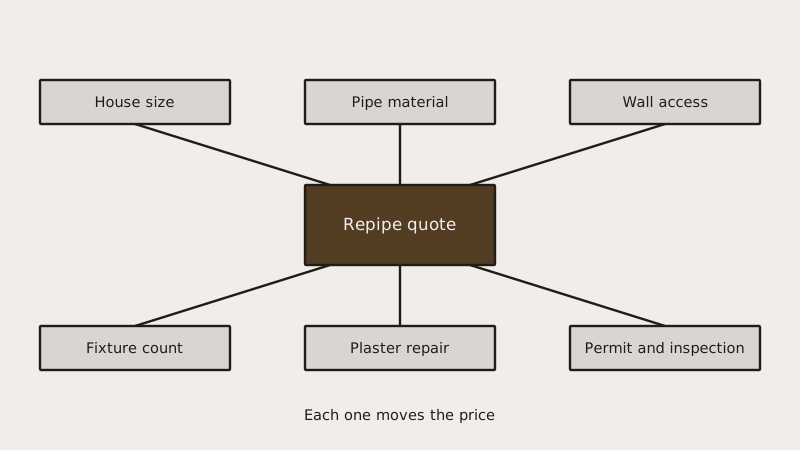
Locally the variables look like this:
- Pipe material. Parts and labor both run higher for copper than for PEX, and CPVC falls between them.
- Access. A one-story house over a crawlspace is simpler than a two-story stucco home with plumbing inside interior walls and no attic hatch.
- Age and condition. Craftsman and mid-century homes sometimes hide mixed galvanized, copper and patched sections that take extra time.
- Patching. Drywall, plaster and paint after the walls are opened can be priced in the plumber's bid or left to a separate trade, so ask which.
- Fixtures. Old shut-off valves and angle stops are often replaced during a repipe and may be itemized.
- Hillside sites. Foothill lots with tight truck access, or a long run from the street, add labor.
Whether to repipe at all is a separate decision. Our page on reasons to repipe works through it, and the comparison of a slab leak fix against a repipe covers the repair-by-repair route.
How long do a house's water pipes last before replacement?
Material, water chemistry and pressure set the timeline. Contractors' lifespan guides commonly list copper lasting 50 to 70 years, PEX at about 40 to 50, and galvanized steel at 20 to 50 before corrosion bites. They are rules of thumb, not promises, and local conditions shift them.
A lot of Pasadena housing is old, so many original galvanized or early copper water lines have reached or passed those ages. Reasons to price a repipe: leaks popping up at several spots, rusty or metallic-tasting water, pressure sliding down, pinholes in copper. One leak alone does not condemn the whole house.
Local water is a blend of groundwater and imported supplies, and hardness leaves scale in older lines. The annual water quality report from Pasadena Water and Power describes what your own tap carries.
Is repiping a house a hard job?
It is skilled trade work, nothing like a weekend task. The plumber closes the supply, threads new lines through walls, floors and attic or crawlspace, reconnects every fixture, pressure-tests everything and arranges the permit inspection. An ordinary house takes days, and the taps stay dry for stretches of every day.
Expect noise, dust and short shut-offs. Many plumbers run the new lines first and cut over fixture by fixture, which trims the time without water. Ask for the schedule in writing next to the price.
Can you repipe your own house? Expect a permit and an inspection with a repipe, and it ties into the water heater and other connections. Most owners hire it out, and California's contractor license rules begin at $1,000 of work.
Is it possible to replumb a house without opening up walls?
Partly, though seldom with no cuts at all. PEX is flexible enough to be fished through walls from small access holes, so many repipes mean patches, not demolition. Plaster, tile and tight walls multiply the openings and the repair work.
Plumbers lean on attics, crawlspaces, closets and cabinet backs to limit damage. Drywall cuts get patched, and the bid ought to name who paints afterward. Plaster-and-lath houses and tiled bathrooms with pipes behind the tile demand more care.
When the trouble sits on one run, a partial repipe may skip most wall work. Which approach fits becomes clear once the lines are traced.
Will a repipe raise my home's value?
It helps a sale more than it adds dollars. Removing a known risk such as polybutylene or leaking galvanized lines can ease inspection and insurance questions, yet buyers seldom pay dollar for dollar for pipes behind walls. See it as protection for the house, not an appraisal boost.
Insurance and lending rules differ by company, so ask yours if an old material is involved. New lines also cut the odds of a claim-sized leak. Planning to sell? Hold on to the permit and invoice as proof of the work.
When is a repipe worth doing, and what is the timeline?
Price one when leaks keep recurring, pressure keeps sinking or the water runs discolored, and the lines are nearing the end of their expected service. Several days is common for an average house, longer for big or awkward ones. Put the schedule in the quote.
To compare bids fairly, line up the pipe material, the scope (whole house or partial), who patches drywall, whether the permit and its inspection are counted, and any warranty wording. A bid that skips these is hard to judge. A written quote through us lists scope and price before work begins.
Common questions
Which problems drag a house's value down most?
Big structural or safety problems hurt most: foundation movement, active leaks with water damage, mold, a failing roof, or known defective materials such as polybutylene plumbing. Repairs with paperwork usually soften the blow. A real estate agent can tell you how it plays on your street, since markets differ.
What do plumbers actually charge to repipe a house?
Price guides from 2026 span $4,000 through $15,000 for a typical house; PEX undercuts copper, and large or hard-to-reach homes cost more. Labor is around 70 percent of the bill. Only a written quote on your particular house gives a figure that counts.
How long is the water off during a repipe?
Count on several days for an average home, with the water shut off during working hours, and longer for big or complicated houses. The quote should carry a schedule and explain how water returns each evening. Drywall patching and paint can add days.
Do I need to repipe my house if it has galvanized pipes?
Not at once, but galvanized steel corrodes inside the pipe, and many guides give it 20 to 50 years. Sinking pressure, rusty water or repeat leaks are your cue to get a price. A plumber can inspect the lines and judge what life is left.
Can I get a repipe done by the square foot?
Some plumbers talk in dollars per square foot as a rough guide, anywhere from about $2 to $9 depending on material and access, but the final price is built from fixtures, access and labor. Request a written scope naming the material and covering the permit.
For what the work involves beyond the price, see plumber pasadena.
Sources
- Estimator Suite, cost to repipe a house
- Angi, cost to repipe a house (labor share)
- Plumbing material lifespan guides from several plumbing contractors, checked November 2026
- California Contractors State License Board, hiring a contractor
Page updated