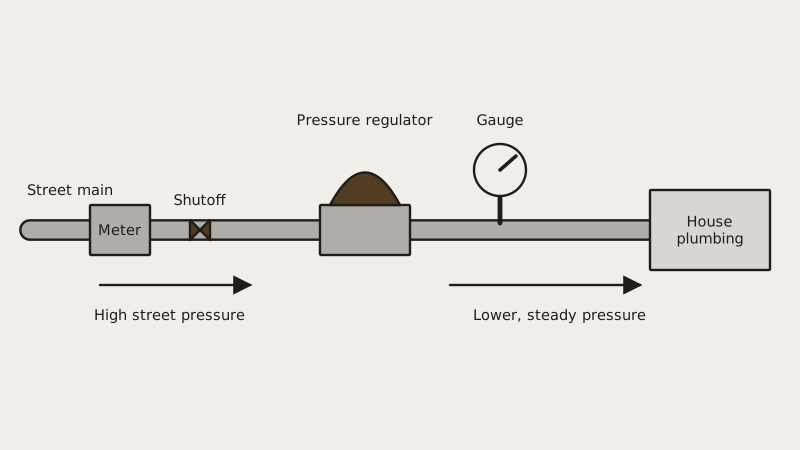
Plan on $250 to $650 for a plumber to install or replace a water pressure regulator, with $300 to $650 the most quoted band. The valve costs $50 to $150, and labor makes up the rest. Buried, corroded or hard-to-reach units push toward the top. The thinking behind the device lives in our overview of water pressure and valves.
What will a plumber bill me for a new pressure regulator?
Published 2026 guides settle on a range of about $250 to $650 for a straightforward install, with HomeGuide citing $300 to $650 and a national average of $475, and Plumbinguide $250 to $600. Labor is the bigger share, roughly $150 to $450 for one to three hours, while the regulator itself is typically $50 to $150.
Wider spreads exist. Some sites quote $250 up to $900 or even $1,200, and those higher numbers usually mean a corroded line, an awkward location, or a shutoff valve that needed replacing at the same time. Replacing a tired shutoff adds roughly $40 to $250 in the guides we read. Coastal metros run higher than rural areas. Hourly rates vary by plumber, and the regulator job is short, so the call-out and minimum charge can matter as much as the hours.
Read these numbers as a yardstick. Only someone who has looked at your line can name the real figure.
What does a regulator replacement run in Pasadena?
For Pasadena and nearby San Gabriel Valley cities, expect the national band to apply, and roughly $350 to $650 is a sensible planning figure for a standard house with an accessible regulator near the main shutoff. We have no Pasadena-specific price survey, so this is an estimate from the guides. If the unit is buried, boxed in behind finished walls, or wants fresh unions plus a shutoff, budget $650 and up.
Local conditions shape the work. A good share of Pasadena houses were framed between the twenties and fifties, and the supply line around the regulator can still be galvanized steel or aged copper. Rusted threads on galvanized fittings seldom unscrew cleanly, so cutting out and rebuilding that stretch is common. Foothill lots can be perched far above, or tucked far below, the street main, and elevation changes the pressure that reaches the house before any regulator touches it.
The routine job runs like this: close the main, remove the old unit, set the replacement on new unions, bring the water back and dial the outlet pressure in against a gauge. A few hours covers most of them.
Why do two regulator quotes differ so much?
The gap usually comes from four things: where the regulator sits, how healthy the pipe around it is, whether a new shutoff or expansion tank joins the job, and a standard brass unit against a high-capacity model. Brand rarely matters as much as access and pipe condition.
A closer look:
- Location. Inside the garage near the main costs less than a unit sunk in a meter box or buried in a planter. Digging adds hours.
- Pipe condition. Old galvanized steel and corroded copper may need new sections. A plumber cannot promise a clean swap until the old one is out.
- Shutoff valves. If the house main shutoff does not close fully, the plumber cannot work safely, and replacing it is extra.
- Expansion tank. Beyond the regulator, the plumbing code wants an approved expansion tank fitted to the cold supply, so heat expansion from the water heater cannot push pressure over the limit. A house without one should expect it as an extra. Our guide to water heater expansion tank replacement covers the part.
- Valve type. A standard residential regulator is a small purchase. Pilot-operated and large-capacity valves for bigger buildings cost far more.
- Permit. Whether a plain swap needs one varies by city, so ask the plumber, and the city's permit counter when in doubt.
Do I need a pressure regulator at all?
Under the state plumbing code, whenever standing pressure inside the house piping tops 80 psi, an approved regulator has to bring it down to 80 or less. A cheap gauge screwed onto an outdoor spigot shows where you stand. Much more than 80 psi strains fixtures, appliances and joints.
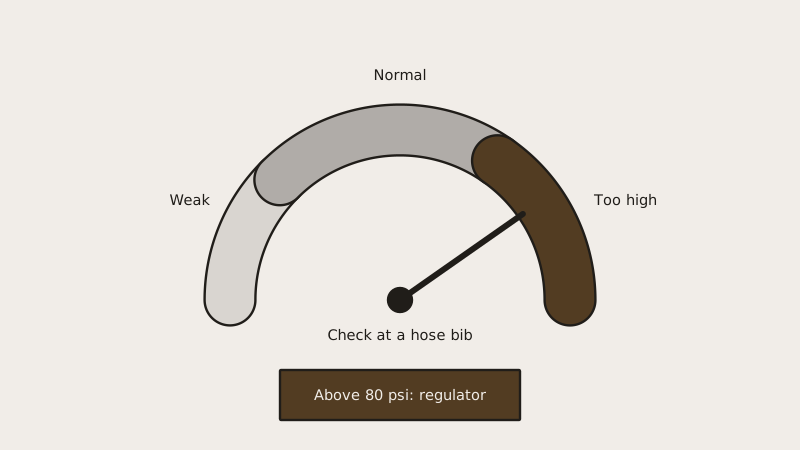
A failing regulator tends to announce itself with banging pipes, a toilet that keeps topping itself off, a weeping heater relief valve, or sputtering faucets. Finding the unit is the first hurdle, and where the regulator is usually located can help. For whole-house setups, see whole house water pressure regulators. The noise symptom has its own guide at water hammer sound in Pasadena homes.
Pasadena Water and Power notes that homes on a hill or far from a booster pump can see lower pressure, and that a permanent pressure drop should be reported to the water emergency line. A regulator only lowers pressure. It cannot fix low pressure, and a brand new one set too low will make things worse. If weak flow is the complaint, low water pressure in Pasadena is the better starting point. If you want to check or change the setting yourself, how to adjust a water pressure regulator valve shows the steps, but a plumber should do a replacement.
What should a fair quote spell out?
A useful quote names the regulator model, the outlet pressure to be set, the unions and shutoff valve if they are included, any expansion tank, any permit, and labor as its own line. One line reading "regulator, $X" hides the items that decide the final bill.
The state's licensing line sits at $1,000 for a job, or any work needing a permit. A regulator swap normally comes in under that, but the C-36 plumbing classification does cover water conditioning and regulating valves, so it is a good license to see on paper. Estimates arranged through us start with a short quote request.
Common questions
How many hours without water should I expect?
Counting from the moment the plumber has access, most swaps take between one and three hours. Corroded fittings, a buried unit, a failing shutoff or a new expansion tank stretch that. Schedule showers and laundry around it, and expect a time estimate once the setup has been seen.
Which points should I settle with the plumber beforehand?
Pressure setting and how it is measured; whether new unions, a shutoff and an expansion tank sit inside the price; whether a permit applies; the length of the job. Get the answers on a written quote showing the contractor license number, then confirm that number with the state.
Is this a DIY job?
Handy owners do attempt it, yet the work means shutting the main, matching pipe connections and tuning outlet pressure on a gauge, and a sloppy joint can flood a room. Anyone trying it should close the main first and test every joint for drips. Most people find the plumber's fee money well spent.
How often do regulators wear out?
Life span swings widely with water quality and pressure, and we found no figure worth quoting. Scale and debris inside the valve wear it. Pasadena's water is rated very hard, so a regulator may fail earlier than in softer-water areas. A gauge check each year or two catches creep.
Can a new regulator cure weak water pressure?
Not by itself, since a regulator only holds pressure down. Weak flow tends to come from clogged aerators, a half-closed valve, narrow or corroded pipe, a regulator set too low, or a problem out on the street. A gauge in a plumber's hands tells those apart.
More of what we arrange can be found from Pasadena Pipe Works.
Sources
- California Plumbing Code 608.2, excessive water pressure (2025 edition)
- HomeGuide, cost to replace a water pressure regulator (2026)
- Plumbinguide, water pressure regulator replacement cost (2026)
- Pasadena Water and Power, water quality FAQs (pressure)
- California Contractors State License Board, C-36 plumbing classification
Page updated