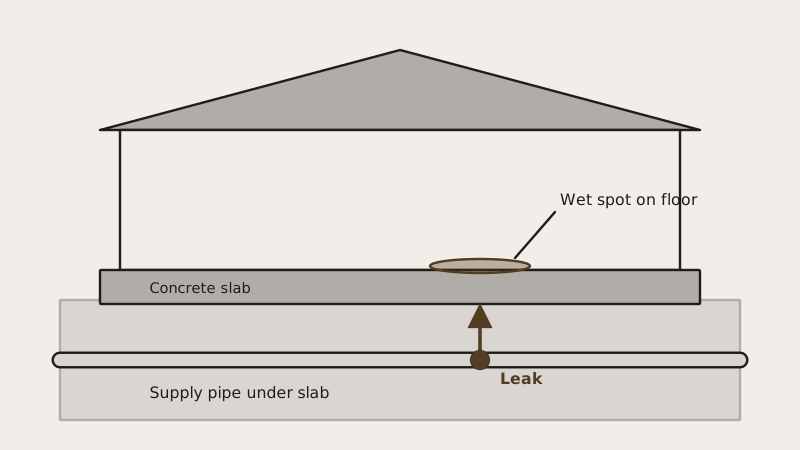
A slab leak is a break in a water line running beneath or inside a concrete floor. Three fixes compete: cut into the concrete and mend that one spot, retire the line and route fresh pipe overhead or inside the walls, or replace the supply pipe house-wide. A local plumber we arrange locates the leak and puts a price on each. The wider picture sits on our burst pipe plumbing page.
Next come the warning signs, how each fix works, rough costs, and the ways Pasadena's permit rules and older homes shift the answer.
What shows that a pipe is leaking beneath my floor?
Clues include a meter that keeps turning while every tap is closed, one patch of floor that runs warm, a trickling sound in a silent house, a water bill that suddenly jumps, damp carpet or baseboards, and weak pressure. A break in a hot line often leaves one stretch of floor warm underfoot.
Test it yourself in five minutes. Shut every fixture, make sure irrigation is off, and find the tiny dial on the meter face that spins whenever water moves. The EPA offers a second method: write down the reading, leave the taps alone for roughly two hours, then check again. A change signals a leak, though not necessarily under concrete, since a bad toilet flapper looks identical on the meter.
Then narrow it down. Close the house shutoff. A dial that keeps turning puts the leak outdoors, between meter and house. A dial that stops puts it inside, where a plumber can separate hot from cold using acoustic gear or a thermal camera. Our guide on spotting a burst pipe lists more clues, and a mystery bill spike is covered in why your water bill jumps.
Which repair method works best for a leak below the slab?
The answer turns on pipe age, the number of leaks so far, and the route the line takes. One leak in otherwise healthy pipe suits a spot repair. Repeat leaks, or pitting in old copper, usually favor a reroute or repipe, since another failure is likely and nobody wants to break the floor twice.
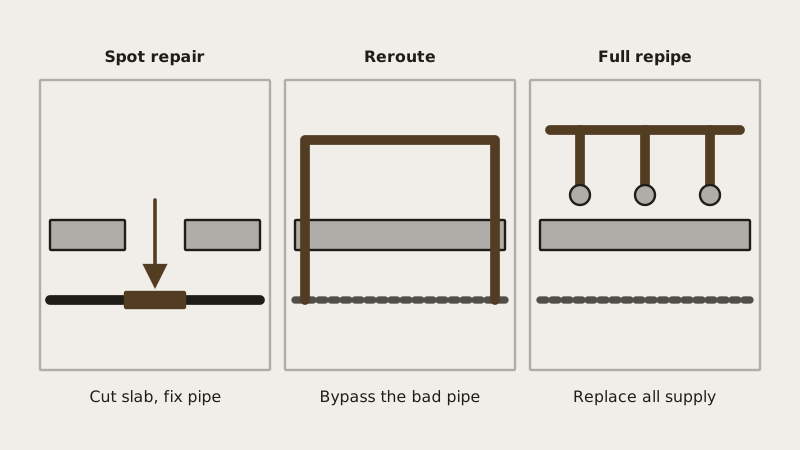
Here is how the choices compare, using ranges drawn from 2026 published cost guides as a guide only:
| Option | What happens | Guide range |
|---|---|---|
| Leak detection | Pinpoint the leak without demolition | $150 to $750 |
| Spot repair | Cut through the slab, fix the pipe, patch concrete | $500 to $3,500 |
| Reroute | Cap the bad line, run new pipe above the slab | $1,500 to $7,500 |
| Epoxy lining | Coat the pipe from within | $1,000 to $8,000 |
| Full repipe | Replace the supply lines throughout | $4,000 to $15,000 |
Costs vary by house size and region, and many guides come from plumbers selling the work, so the written quote decides. Lining does not suit badly corroded pipe or every size of line.
Spot repair wins on speed and first-day price, but it brings a jackhammer, dust and lifted flooring. A reroute skips the slab: new PEX or copper is pulled through attic or walls, swapping floor demolition for drywall patching. A repipe replaces the lot and deserves a quote whenever the pipe is the same vintage throughout. Repipe costs and PEX repipe prices show what a house of your size can run.
When does repiping a slab house beat patching the leak?
Repipe when the pipe itself is tiring, not merely one joint. Telltales: a second or third leak, pinholes in copper, rust-tinted water, or galvanized steel or ageing copper feeding the fixtures. On a slab house the new lines typically run overhead or inside walls, so the concrete stays intact.
Many houses of the slab era were plumbed in copper. Mineral-rich water is often blamed for pinholes over decades, and Pasadena's supply is hard: the utility's 2025 readings ranged from 202 to 256 ppm, near 13 grains per gallon. That does not prove your pipe will fail, but it is a reason plumbers look closely at older copper here.
Pipe material matters too. PEX bends easily, suits rerouting and does not corrode like metal. Copper lasts but costs more. The PEX versus copper page sets out the trade, and why homes get repiped is useful reading while you decide.
Housing type shapes the call. I think many of Pasadena's older houses sit on raised foundations over crawlspaces, which are easier to repair than a slab, while slab-on-grade construction shows up more in postwar tracts. If you have a crawlspace, access may be simple, and the attic and crawlspace plumbing page covers that setup.
Does fixing this need a permit?
In Pasadena, the Building and Safety Division's exemption sheet says stopping a leak needs no plumbing permit. But when a concealed pipe is defective and must be removed and replaced with new material, that counts as new work needing a permit and an inspection. A reroute or repipe therefore does.
Separately, state law wants a California contractor license as soon as a job hits $1,000 in parts and labor, or involves a permit. Slab work nearly always crosses that line. Request the contractor's license number, confirm it with the state board, then settle who files the permit.
Gas piping follows its own rules, so keep clear of any repair near a gas line. The smell of gas is a reason to exit immediately and, from outside, dial 1-800-427-2200 for SoCalGas. Leaking water can also reach wiring, so cut power to any wet zone you cannot safely approach.
Insurance is its own question. Many policies cover damage that results from a sudden leak but not the cost to repair the pipe itself, and the terms differ. Our piece on burst pipe insurance explains more. Call your insurer before work starts, since a leak-detection report may be wanted.
What can I do today while waiting for a visit?
Close the main shutoff if water is visible, get rugs and furniture off the wet floor, and run a fan. For a leak only the meter reveals, closing the main may halt the loss until help arrives. Pasadena Water and Power lists its water emergency number as 626-744-4138 for main breaks or sudden pressure loss.
Have these ready when you send the request:
- The year of the house and the pipe material, if known.
- Where you notice warmth, dampness or sound.
- Your recent water bills.
- A note about any earlier leaks.
Requests are read Monday through Friday, nine to five. A local plumber then books a slot, inspects the problem and writes up the choices. Steps appear in how it works; send details through the quote page. For anything else, start at the home page.
Is a leak in a concrete roof slab the same problem?
No. Water seeping through a flat concrete roof or balcony deck is a waterproofing or roofing matter, not a supply-line break. A roofer or waterproofing contractor usually handles it. A plumber joins in only when a drain, pipe or fitting passes through that deck. Damp ceilings below are first a question of where the water enters.
Common questions
How many days will the floor stay open?
Pinpointing the leak takes a few hours. A spot repair often fills a day, with concrete curing and floor patching after. A reroute may take one to three days, while repiping the whole house may stretch to several days, depending on size. The quote should give a schedule and say how you keep water running meanwhile.
Does the leak damage my foundation?
A small leak is unlikely to hurt the structure quickly, but ongoing water can erode soil under the slab, raise humidity, grow mold and ruin flooring. For soil movement or cracks, ask a structural professional. Fixing the leak soon limits the damage and the cost, so do not leave it for months.
Can a homeowner repair a slab leak?
Shutoff and basic detection, yes. The repair, no. Breaking concrete, cutting pressurized pipe and replacing concealed lines go to a contractor whose California license is on file, and Pasadena expects a permit for new concealed pipe. A DIY patch can leave a hidden leak soaking the house for months.
Is slab leak repair different in other cities?
Techniques match everywhere: detection, spot repair, reroute, lining or repipe. What differs is local code, water hardness, how old the housing is and what labor costs. We work in Pasadena and the San Gabriel Valley, so quotes here reflect local permit rules and the usual foothill and valley homes.
How do I know if a plumber's leak detection is accurate?
Ask how the plumber will pinpoint the leak before cutting concrete. Good methods combine a pressure test, acoustic listening and sometimes a thermal or tracer-gas check. The cut should be small and sit right over the leak. A plumber who wants to open large areas without a diagnosis deserves questions.
Sources
- City of Pasadena Building and Safety Division, work exempt from plumbing permit (replacement of concealed pipe is new work needing a permit)
- Pasadena Water and Power, 2026 water quality report (2025 data)
- Pasadena Water and Power, water troubleshooting and emergency line
- U.S. EPA WaterSense, Fix a Leak Week (meter leak test)
- Plumbing Price Guide, slab leak repair cost
- Empire Home Protect, slab leak repair cost 2026
Page updated