If your house still has polybutylene, plan to replace it. Polybutylene (nicknamed Poly-B) is a grey plastic supply line that builders used across North America for roughly two decades, ending in the late 1990s. Chlorine in city water slowly breaks down the pipe and its fittings, so it can seep for months or let go without warning. This guide covers identification, replacement pricing and the choice of new materials. For the wider picture, begin at Pasadena Pipe Works, or ask for a written price on the quote page.
Which pipes in my house are polybutylene?
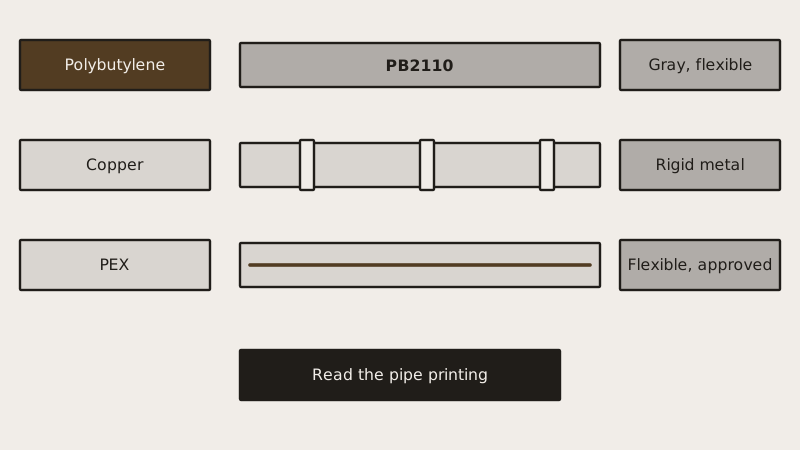
The material is a bendable plastic tube, most often grey, though blue and black versions exist, and the printing along its length usually starts with the letters PB. It tends to run from the meter to the water heater and on to the fixtures, joined with crimped metal rings or plastic fittings instead of soldered or glued joints.
Check where pipes are exposed: under sinks, behind toilets, at the water heater, in the garage and at the main. The usual suspects around Pasadena are houses built or remodeled during the 1980s and early 1990s. Craftsman bungalows and midcentury ranches started with galvanized steel or copper, so mixed systems turn up often: old metal in the original rooms, grey plastic in a back addition. One short visit settles the question, and it pays to do that before a sale or purchase.
Is polybutylene the same as PEX?
No. PEX is cross-linked polyethylene, a different plastic that is still approved for drinking water and widely used. Polybutylene is a separate material that fell out of favor and is no longer accepted by US building codes. They can look alike, since both are flexible tubing sold in several colors, so read the printing on the pipe instead of trusting color or feel.
It matters because PEX is what most replacement projects use. How it measures up against metal is covered in PEX piping vs copper.
Should I replace polybutylene before it leaks?
In most cases yes, though not by a fixed date. The pipe does not wear out from use. Disinfectants in the water, chlorine and chloramine, attack the plastic and the acetal fittings from the inside, and stress at bends and joints speeds things along. The outcome can be a slow seep in a wall or a fitting that fails while nobody is home.
Plenty of owners act early, since a single failed fitting behind a wall brings drywall, flooring and mold work on top of the plumbing bill. If the lines are dry and a repipe has to wait, close the main valve before any long trip, learn where it sits, and watch the water bill for a jump nobody can explain, often the first hint of a hidden leak. Already seeing damp spots? Learn the warning signs of a burst pipe.
What will a polybutylene repipe cost me?
As a rough guide, published figures for swapping a whole house span $4,000 to $15,000. PEX sits low in that spread, copper sits high, and most homes fall between. Square footage, bathroom count and wall access push the number around more than the tubing does.
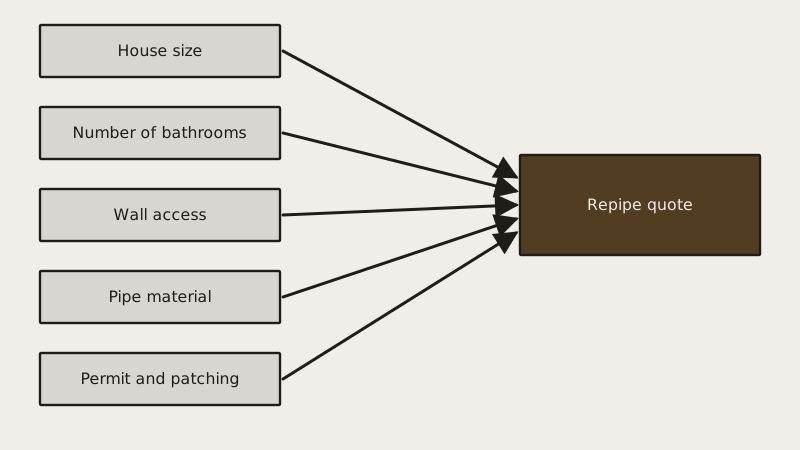
Most of a repipe bill is labor. Wall patching, texture and paint often sit outside the pipe price, and any city permit fee is separate again. Ask whether patching is included and who performs it. Your written quote should name the pipe material, the fixture count, the wall repair and the permit before work starts. For a fuller breakdown see repipe pricing for a home, and the plastic route is priced in how much it costs to repipe with PEX.
Is repiping a whole house a hard job?
It is a trade job, not a weekend project. The crew drains the system, pulls new lines to each fixture, ties them into the heater and the main, tests under pressure, then patches the openings. A two-bathroom house in PEX often wraps in a day or two; copper stretches longer because each joint is soldered by hand.
The hard part for you is the disruption. Expect no running water for part of each day, clear closets and cabinets, and some opened drywall. Request a schedule and a list of what gets patched. State law requires a contractor license once a job passes the small-job limit. Before you sign, search the contractor's license number at cslb.ca.gov.
Is it possible to repipe without tearing out the walls?
Damage can usually be kept small, though rarely to nothing. PEX flexes, so it can be fished through cavities, attics and crawlspaces, leaving a few access holes near the fixtures. Rigid copper needs straighter paths and more openings. Slab foundations, second stories and plaster walls all change the answer.
Pasadena's older plaster-and-lath rooms show patches more than newer drywall, so ask how each opening gets restored. Some jobs run lines overhead and drop them through closets so finished rooms stay intact. What that overhead access involves is described under attic and crawlspace plumbing. Cast iron drains under old houses are a separate question, covered in cast iron pipes.
Will a repipe raise my home's sale price?
Mostly it defends the price rather than lifting it. Buyers, inspectors and insurers who spot polybutylene tend to ask for a replacement or shave their offer. New PEX or copper removes the objection, and permit paperwork helps at resale, yet you should not expect the full cost back.
Treat it as retiring a known risk. Sellers gain a concrete number to negotiate with once a quote exists. Owners who stay get fewer surprise leaks and steadier flow. Other reasons to repipe, such as rusty galvanized steel and weak flow, are laid out in why repipe a house.
Can I clamp a copper pipe or mend it without a torch?
Yes, for a small repair. A push-fit coupling slips over clean, square-cut copper and seals with a grip ring and O-ring, while a compression fitting closes with two wrenches. A repair clamp wrapped over a pinhole buys a little time. Both styles can also bridge copper to PEX.
Think of a clamp as a bandage. Pinholes tend to signal copper thinning from within, and more can follow. Close the valve, dry the section, make the fix, then let a plumber judge the remaining runs. A leak inside a wall cannot wait. The walk-through on a leaking copper pipe shows each step.
Common questions
What devalues a house the most?
Foundation and structural defects, serious water damage with mold, and worn-out roofs, panels or supply lines weigh heaviest on a sale. Polybutylene belongs in that company because buyers and insurers see a known hazard. Fixing it early and keeping the records shrinks the discount.
Should I buy a house with polybutylene pipes?
It is possible if the numbers work. Have the inspector identify the pipe, collect a repipe quote before closing, and negotiate a lower price or a seller credit. Call your insurer too, since some carriers limit or decline coverage on homes with this pipe.
Will insurance cover replacing polybutylene pipes?
Rarely. A standard homeowners policy answers for sudden water damage, not for retiring a pipe that has not failed yet. Some carriers raise premiums or decline the house. Put your question to your agent in writing. If a burst has already happened, does insurance cover a burst pipe lays out the usual coverage.
Was there a lawsuit over polybutylene?
Yes, a large one against the resin makers, known as Cox v. Shell Oil, which published accounts say settled for roughly a billion dollars. Do not assume it pays for anything today. Its real value is as evidence that the trouble was widespread rather than a handful of bad installs.
More in this guide
- Cast iron pipes
Cast iron drain pipes in a Pasadena home: how long they last, signs of failure, replacement cost per foot, whether you need a permit, and…
- Pex repipe cost
What a PEX repipe costs for a typical Pasadena house, how copper compares, what a two-bathroom home runs, and the extras that move the bill.
- Costs
What repiping a house costs in 2026 as a guide: PEX versus copper, price per square foot, what pushes a Pasadena quote up, and how to…
- Repiping and pipe replacement
PEX or copper for a Pasadena repipe? Compare cost, lifespan, flow and the pinhole-leak risk in hard local water, with price ranges and…
- Repiping and pipe replacement
Why repipe an old Pasadena house: polybutylene, galvanized steel and pinholed copper, the warning signs, what repiping costs and how long…
Sources
Page updated