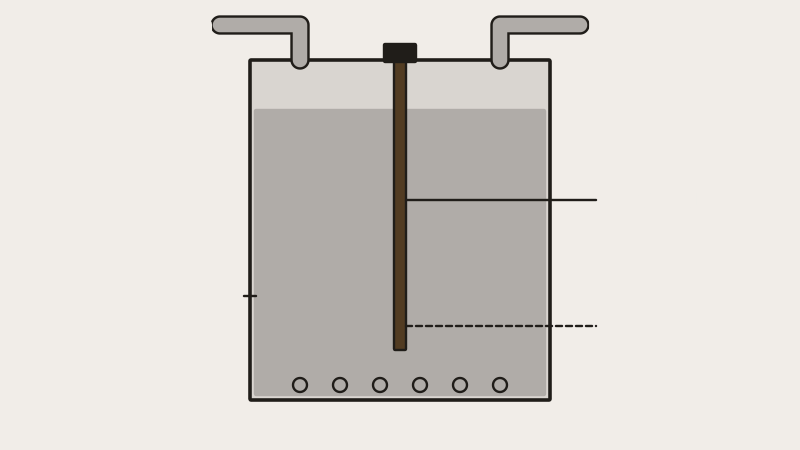
Replace the anode rod when most of its metal is gone, which for a Pasadena tank heater often means looking at it every few years rather than waiting for a problem. The rod is a metal stick threaded into the top of the tank, built to rust away so the steel shell does not. When it is gone, the shell becomes the target, and that is the beginning of the end for the heater. Below you will find how to judge the rod, what a swap involves and when it stops making sense. The full picture is in our water heater replacement hub.
What does an anode rod do inside a water heater?
It sacrifices itself. The rod is made of magnesium, aluminum or an aluminum-zinc mix, and these metals corrode more readily than the steel tank. Any attack by the water goes after the rod first. As long as some rod remains, the tank lining is protected from rust.
Think of it as a consumable, like a car's oil filter, not a lifetime part. A. O. Smith, a major maker, tells owners to inspect the rod once a year. Tankless heaters have no storage tank and so no anode, which is part of why they last longer. The rod is only an issue on tank models.
When is the anode rod due for replacement?
There is no single number, because the rod wears at the speed of your water. A. O. Smith says to inspect it once a year. Many plumbers suggest looking every two to three years in hard water and replacing it when it is thin or coated.
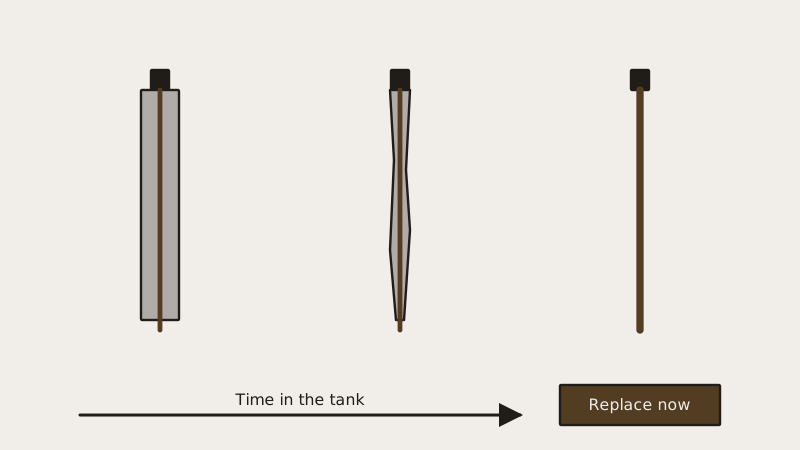
Pasadena's supply is hard. Pasadena Water and Power measured 202 to 256 ppm of hardness in 2025, around 13 grains per gallon, and the blend of well water and imported supply shifts over the seasons. A water softener in the house is another factor in how fast the rod wears, and the maker lists it too. A heater past five years old whose rod nobody has ever looked at is overdue. How much your own street varies is on the page about water hardness by ZIP code.
How can I tell the anode rod is used up?
A spent rod is thin, pitted or reduced to the steel core wire. A. O. Smith's guide says to replace a rod that has deteriorated or shows several inches of bare core wire. Home signs include rust-tinted hot water, a rotten egg smell, and popping from the tank.
Those signs have other causes, so treat them as a prompt to look, not proof. The smell, for example, can come from bacteria reacting with the rod and sulfates in the water, and swapping to a different rod type sometimes helps. Rust in the hot water only is a stronger hint than rust in both lines, which points to pipes. Water at the base is a separate matter. It means the shell has failed, and no rod fixes that. First steps are in leaking water heater repair.
Can I replace the anode rod myself?
It is possible and plenty of owners do. The tools are a socket sized for the hex head (A. O. Smith's guide names a 1 1/16 inch deep-well socket) and a long breaker bar, since factory torque is high. The rod may be several feet long, so check the clearance overhead; a segmented flexible rod suits low ceilings. Cut power or gas, shut the cold valve and relieve pressure first.
Trouble spots: a seized hex head, stripped threads, a heater boxed into a closet or attic with no headroom, or the tank is already corroded so removing the rod reveals problems. Gas heaters add a pilot or burner to deal with, and every heater is heavy and full of hot water. If anything seems off, stop and let a plumber finish. Past 10 to 12 years a heater is rarely worth a new rod; the reasoning is in how often a water heater needs replacing. Also check the tank's warranty text before you open it.
What does anode rod replacement cost?
The rod is a small purchase next to the heater, and the labor is typically an hour or two. We do not have a verified Pasadena figure to print, so ask for a written price once the plumber has seen the access and the age of the unit.
Compare it with a new heater, described in the price of water heater replacement. If a plumber suggests a rod swap on a heater that is already leaking, or past its normal life, ask why. The honest answer is sometimes that the tank is done. Since someone is already at the tank, ask about the relief valve, a sediment flush and the condition of the expansion tank, which expansion tank replacement describes.
Which kind of anode rod should I choose?
Magnesium rods give the strongest protection in soft water and wear faster. Aluminum rods last longer in many homes, though they can leave residue. Aluminum-zinc rods are sold for water with a sulfur smell, and a powered rod uses a small current and does not wear out the same way. Match the choice to your water and your heater's warranty.
Do not guess. The maker's manual often lists the approved rod length and fitting. Ask the plumber which type they would use here and why. In a hard-water city a plumber may favor aluminum or powered rods, but that depends on how the heater is used and what else is on the line. For a quote, start at the quote page, and send the heater's brand and age if you have them.
Common questions
How long does the swap take?
A straightforward rod change typically fills an hour or two, including draining a few gallons from the tank. A seized rod, tight clearance or a heater up in an attic can double that, so expect to be given an arrival window.
What should I check before hiring someone to do it?
Verify the contractor license number with the state. Ask which rod type goes in, whether the old rod will be shown to you so you can judge the wear, and what the price covers. Ask also if the heater's age makes a replacement unit a better buy.
Should someone stay at the house during the swap?
Yes. The plumber needs the heater reachable, the water shut off and a decision from you if the rod turns out to be eaten away or the tank starts leaking. Clear the area around the unit before the visit, and mention any known quirks of the heater so nothing is a surprise on arrival.
Can a worn anode rod affect my warranty?
That depends on the maker and the model. Some warranties exclude the rod or tie coverage to maintenance. Read the text for your heater, keep a record of each inspection, and ask the maker before you open the tank.
For the wider picture, start with Pasadena plumber.
Sources
Page updated