Maintenance plumbing is the scheduled, unglamorous side of the trade: a plumber checks supply lines, shutoffs, the water heater, fixtures and drains for wear, and fixes small faults before they become emergencies. Most homes in Pasadena and the San Gabriel Valley would gain from one visit a year. Everything else we handle sits on the home page.
Inside: the work a maintenance plumber does, a checklist you can run yourself, how local hard water bends the routine, where gas fits, and how long pipes last. To schedule, fill in the quote page.
What goes on during a maintenance plumbing visit?
The plumber looks over all the plumbing you can see, measures water pressure, works every shutoff, examines the heater, peeks under sinks and behind toilets for slow leaks, and runs each fixture to catch drains that are starting to lag. You end up with a short list: fix now, watch, or fine.
Picture a car tune-up with no breakdown required. The plumber moves through the house in sequence: main shutoff at the meter side, pressure at an outdoor spigot, then the heater with its relief valve and straps, then each kitchen, bath and laundry fixture.
A visit like this is not a repair session, and the plumber specializes in spotting trouble, not rebuilding anything. Anything that needs fixing is priced on paper first. If one needs a permit, a heater swap for instance, the plumber handles the paperwork with the city's building office.
What belongs on a yearly home plumbing checklist?
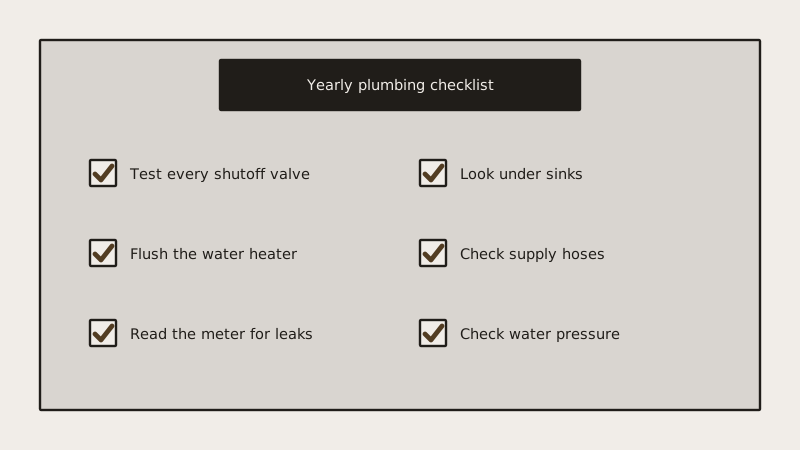
A solid annual check takes in pressure, the main shutoff, toilet and sink supply lines, traps under sinks, the heater, washing machine hoses, outdoor spigots and a slow-drain test. In an average home that is roughly an hour of looking, and the real value is a written list of what looks tired.
| Area | What is checked | Why it matters |
|---|---|---|
| Water pressure | Gauge reading at an outdoor spigot | Too much pressure strains pipes, valves and appliances |
| Main shutoff and angle stops | Operate each and look for seizing or weeping | A stuck valve fails you in the middle of a leak |
| Water heater | Relief valve, drips, straps, sediment, venting | A failed heater floods and scalds |
| Toilets | Flapper, fill valve, rocking at the base | Silent leaks waste water and lift the bill |
| Sinks and showers | Traps, supply lines, cartridges, aerators | Slow drips rot cabinets |
| Washer and dishwasher | Hoses and connections | Burst hoses cause big water losses |
| Drains | Flow in each fixture | Early warning of clogs or roots |
What can I check myself between visits?
A flashlight and ten minutes go a long way. Check beneath every sink for damp or corrosion, run each fixture and watch how it drains, dye-test toilets, listen for water running when nothing is on, and locate the main shutoff, then tell everyone at home where it is.
Two tests come from EPA WaterSense. Toilet test: drop a bit of food dye into the tank, and dye showing in the bowl ten minutes later points to a leak. House test: jot the meter reading, leave all taps shut for a couple of hours, then compare, because any change means water is escaping. EPA puts the waste from household leaks above 9,300 gallons yearly.
A meter that never stops, or a bill that climbs while habits stay the same, is explained on the high water bill page, along with the usual suspects.
How does Pasadena's hard water affect plumbing maintenance?
Pasadena Water and Power describes the city's water as very hard, with an average of 12.9 grains per gallon, a figure that shifts by season as the source mix changes. Hard water leaves scale on heating elements, in tank bottoms, in aerators and in showerheads, which is why maintenance here leans on the water heater.
Per that same FAQ, about two-fifths of supply is groundwater drawn from the Raymond Basin, and the rest arrives through Metropolitan Water District wholesale imports. The split can drift between years, so read the current annual report. Other San Gabriel Valley cities get water from their own city departments or water companies, and their hardness differs.
In practice, hard water means flushing the water heater tank on schedule, checking the anode rod, descaling aerators and showerheads, and watching fixtures for crusty buildup at the stem. Our pages on removing hard water scale and water hardness by zip code go deeper.
What should be done to the water heater each year?
Priorities are exercising the relief valve, draining sediment out of the tank, inspecting the anode rod, confirming the thermostat setting and checking the straps. U.S. Department of Energy materials point to 120 degrees for most homes, while maker guidance on relief valve tests, flushing and rods varies.
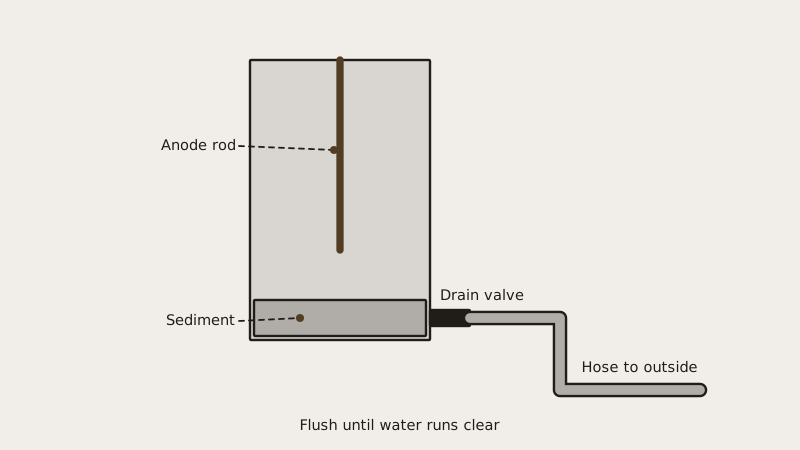
The anode rod is a sacrificial metal rod that protects the tank from corroding; it wears out faster in hard water. A heater past roughly a decade is a candidate for replacement rather than more repairs, and our anode rod replacement and water heater replacement pages explain the choices.
Earthquake rules for heaters sit in California's Health and Safety Code (19211): residential units get braced or anchored. For that reason the straps get a look on each visit. A gas water heater also needs a look at its venting and combustion air, which is part of why gas appliances deserve a professional's eyes.
What does gas have to do with plumbing maintenance?
Gas lines, shutoffs and appliance connections belong to plumbing, and piping or repair jobs go to someone with a California contractor license. A visit includes a look at visible connections and appliance shutoffs, but it never replaces SoCalGas when you smell gas.
Smelling gas? Exit the house, and only then ring SoCalGas at 1-800-427-2200, saving 911 for real danger. Leave light switches and appliances alone on your way out. Own an earthquake valve? Ask the plumber to confirm it is approved and mounted properly; gas line jobs are outlined on our natural gas pipe page.
Irrigation systems and some properties also need backflow testing, usually on a yearly schedule set by the water supplier; see backflow testing for how that works.
At what age do a home's water pipes need replacing?
No single date applies. Lifespan guides from plumbing contractors give copper about 50 to 70 years, PEX roughly 40 to 50, and galvanized steel 20 to 50 before corrosion sets in. Water chemistry, pressure and workmanship shift those figures, and plenty of pipes beat or miss the averages.
Many Pasadena houses are decades old, and some still run on the galvanized or early copper pipe they were built with. Replace on evidence, not age alone. Recurring leaks, cloudy or metallic-tasting water, sliding pressure and pinholes in copper are the real prompts, and a maintenance plumber can judge the lines.
Should the evidence point to new lines, our repipe price guide sets out typical costs.
How often should I book maintenance, and who benefits most?
Once a year suits most houses, and sooner after a leak, a remodel or a long vacancy. Older homes, rentals, landlords with several units, homes with a water softener or irrigation, and anyone with a tank water heater over about eight years old get the most from regular visits.
For property managers and communities with several units, a scheduled round of shutoff, heater and hose checks across every unit catches the repeat offenders. Heating, air conditioning and plumbing share closets and attics, so the visit often notes condensate lines and drip pans too.
On the quote page, say how old the house and heater are, so the plumber can size the job. Good pros leave you a written list, not just a verbal rundown.
Common questions
What happens on an ordinary maintenance call?
Expect checks of pressure, the main shutoff, the heater, toilets, sinks, showers, washer hookups and drains, followed by a report on what needs repair now and what can wait. Inspection comes first, any repair is priced on paper beforehand, and nothing proceeds without your approval.
Does an annual plumbing inspection pay off?
For most homes, yes. Small leaks, seized shutoffs and a tired water heater are far cheaper to deal with on your schedule than in an emergency. A visit is especially useful in older Pasadena homes and rentals, where hidden wear is more likely and a burst line can do serious damage.
How would I know if water is leaking somewhere I can't see?
Note the meter, keep water off for two hours and check again; movement means a likely leak. EPA WaterSense adds a cold-month test, where a four-person household past 12,000 gallons suggests serious leaks. A plumber can then trace the source.
How long should a tank water heater last?
Many tank heaters serve roughly ten to fifteen years, though hard water can shorten that without flushing and anode rod care. Look up the age on the serial number on the label. Leaks from the tank wall mean replacement, while a failing valve or element can often be repaired.
Who lets the plumber in for a maintenance visit?
Have an adult present or arrange entry, which gives the plumber access to the heater, the cabinets and the shutoffs and someone to hear the findings. If a tenant or property manager will open the door, mention it when you book.
Sources
- Pasadena Water and Power, water quality FAQs
- EPA WaterSense, Fix a Leak Week, finding household leaks
- U.S. Department of Energy, water heater guidance (EnergySavers and Building America materials), checked November 2026
- SoCalGas, gas safety and leak response
- Plumbing material lifespan guides from several plumbing contractors, checked November 2026
Page updated