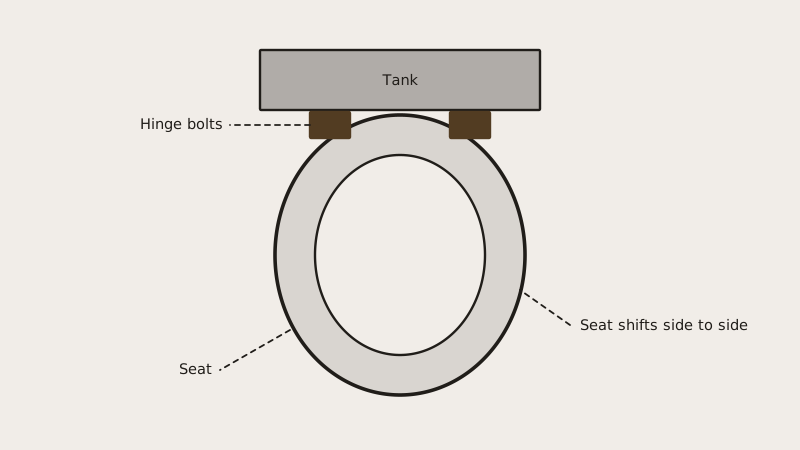
A wobbling seat gets fixed at its two mounting bolts, set into the rear rim of the bowl: snug them while the lower nut is held still, and stop before anything cracks. If the bolt spins without biting, or the hinge is worn, a new set of bolts or a whole new seat costs little. That is the whole job, and it needs no plumber. If the entire toilet rocks against the floor, though, you have a different fault, and our toilet repair guide explains it. The quote form is there for anything that needs a plumber.
Is it the seat that is loose, or the whole toilet?
Place a hand on the bowl and push sideways while someone sits on the seat. If the seat slides on a firm bowl, the seat hardware is slack. If the porcelain itself shifts or rocks on the floor, the toilet is loose, which involves the closet bolts and wax seal, not the seat.
A rocking toilet is worth attention. Rocking can crack the wax seal under the bowl, and a leak or sewer smell can follow. Look for staining or soft flooring around the base. If you find any, stop using the toilet for now and read about a toilet leak, since that is no longer a seat problem.
Which fixing style is on my seat?
Check the rear of the seat. A pair of little flip-up covers hides bolts you tighten from above: that is a top-fixing seat. A seat with nothing on top has bolts that run down through the bowl to nuts underneath, which is the bottom-fixing type. Many skirted or one-piece toilets only accept top-fixing seats.
Both types work the same way, a bolt through a hole in the bowl rim, held by a nut. The difference is which side you tighten from. The thing to know before you begin is what the bolts are made of. Plastic bolts and nuts strip or snap with a heavy hand, while brass or stainless ones last, and rust on old metal can seize them.
How do I tighten the bolts without breaking anything?
Pry up the covers with a flat screwdriver, steady the nut beneath the rim, using pliers or fingers, and turn the bolt from above until the seat stops moving. On a bottom-fixing seat, hold the bolt head from above and turn the wing nut below. Alternate sides in small turns, and stop at firm.
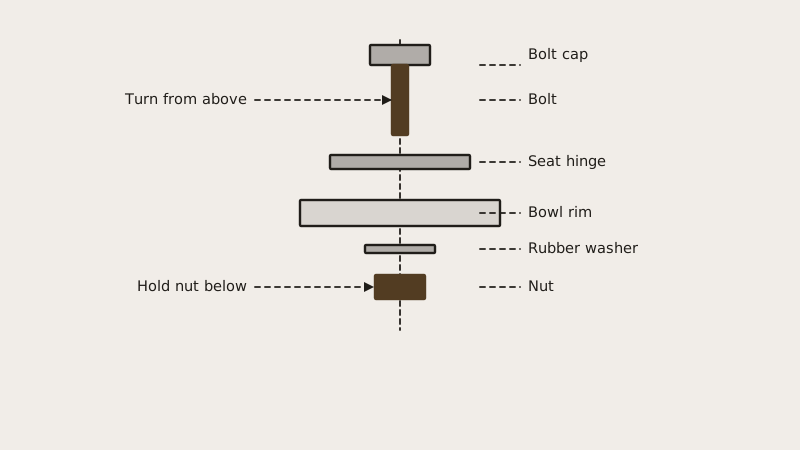
A few details help. Center the seat over the bowl before you tighten, so the rim lines up all around. Tighten both sides a little at a time, not one fully and then the other, to keep the seat level. After it feels solid, add only a quarter turn. Porcelain and plastic both crack under force, and a split bowl cannot be repaired. If you feel resistance and then a sudden give, that is the sound of something failing, so stop.
A fresh rubber washer under each nut can improve grip. If the nut spins and never tightens, the threads are worn and tightening will not help.
What if the bolts spin and never tighten?
Then the threads are stripped or the nut is cracked. The cheap cure is a replacement bolt-and-nut set, sold as universal toilet seat hardware, and stainless or brass lasts longer than plastic. A rusted bolt that will not turn can be soaked with penetrating oil, held with a screwdriver and loosened with pliers.
A rusted bolt that refuses to turn can be cut with a hacksaw blade slid in between seat and bowl. Protect the porcelain with tape or a cloth, and cut slowly. A seat that has hinges molded in as one piece, or cracked plastic around the bolt holes, is best replaced whole, because new bolts will only slip out again.
How do I choose a replacement seat that fits?
Pick the right shape first. A round bowl is shorter from front to back, and an elongated bowl is longer, with about 16.5 inches for round and 18.5 inches for elongated as common guide figures. Run a tape from the bolt holes out to the front lip of the bowl and compare with the packaging, since sizes vary by maker.
Also check the distance between bolt holes, which is the same on most modern toilets but worth measuring. Soft-close seats cost a little more and stop slamming, while a basic plastic seat is the cheapest. Whichever you choose, avoid heavy cleaners on plastic hinges and bolts. Hard water can stain and crust hardware; Pasadena Water and Power's latest report shows hardness near 12 to 15 grains per gallon, and a regular wipe with a mild cleaner keeps new fittings working longer.
When is a loose seat a sign of something else?
When the bowl moves, the floor feels soft, or there is a leak or odor at the base. Those point at the flange, wax seal or subfloor, and the repair involves lifting the toilet. In older Pasadena bathrooms with rusted cast iron drains or aged flanges, a plumber can check all of it in one visit.
For that kind of repair, see our guide on what a toilet leak involves and the toilet installation cost guide for the price side of replacing a toilet. A cracked bowl or tank is not repairable, and the fixture needs replacing.
Common questions
What makes a seat work loose again and again?
Typically because the bolts are plastic and have worn, the nuts are not locked in place, or the seat is used heavily and the fixings back off. Brass or stainless bolts and a rubber washer help. Check it every few months, since regular tightening is cheaper than a new seat.
Can I use a wrench to tighten the bolts?
A screwdriver and hand pressure are usually enough. A wrench or pliers can hold the nut still but should not apply force to the bolt. Overtightening can crack the bowl or snap plastic fittings. Tighten until the seat stops moving, then add a gentle quarter turn.
How much does a new toilet seat cost?
Basic seats and hardware kits are inexpensive at hardware stores, with soft-close and specialty seats costing more. Prices vary by store and style, so check current listings. If a plumber is already visiting for another toilet job, they can fit the seat in minutes, but this repair rarely needs one.
Do round and elongated seats fit the same toilet?
No. The shapes differ, and the wrong one will overhang the bowl or leave part of the rim exposed to view and to dirt. Measure bolt holes to bowl front and match the packaging, or bring a photo of your bowl to the shop if you are unsure.
How do I stop a soft-close seat from slipping?
Tighten the bolts and nuts evenly with the seat centered, then check that the hinge covers are clipped down and the rubber bumpers are in place. If a soft-close hinge still slides, the hinge is worn or the bolts are the wrong size, and replacing the hardware or seat is the usual cure.
More of our plumbing help is on the Pasadena Pipe Works home page.
Sources
- Toilet seat tightening and replacement guides from several home repair publishers, checked November 2026
- Pasadena Water and Power, water quality FAQs
Page updated