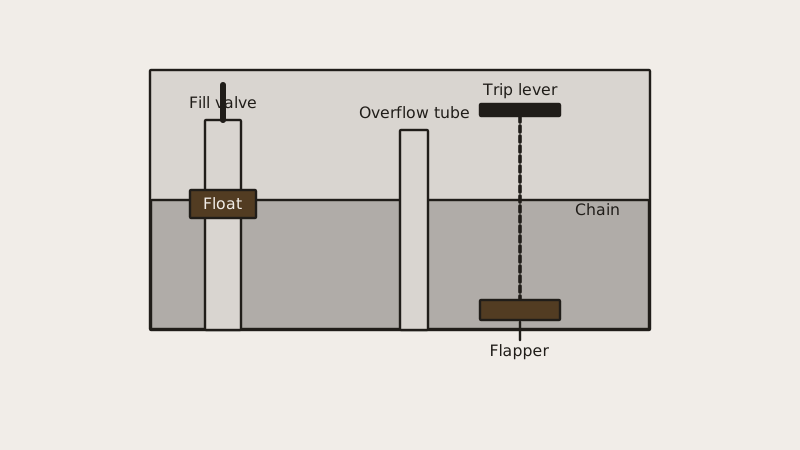
A fill valve is the tall, hissing part on the left side of a toilet tank, and repairing it means swapping it for a new one: close the wall valve, empty the tank, unthread two nuts, drop the old unit out and seat a new one at the height printed on its instructions. Most people finish in under an hour. This guide also covers the flapper, the running-toilet water bill and the scarier case of a burst supply line. Bigger faults, like a cracked bowl or a leaking floor seal, fall under toilet repair.
What are the steps to replace a toilet fill valve?
Shut the angle valve at the wall, flush, and mop the tank bone dry. Loosen the supply nut at the tank bottom, then the big locknut that holds the valve through the porcelain. Pull the old valve up and out. Seat the new one, set its height, snug the locknut by hand, clip on the refill tube and test.
Snap a phone photo before you disassemble so you can see how the lever and chain sit. Height is the step people skip. Makers print a critical-level mark on the valve that has to clear the top of the overflow tube by about an inch; set it low and the tank can siphon backward. Resist the wrench on plastic nuts, because a cracked tank base means a new toilet. Aim the little refill tube into the clip on the overflow pipe, not down inside it. Turn the supply back on slowly, watch each joint, and stop when the water level sits roughly half an inch under the overflow rim.
How do I replace a flapper or a flapper gasket?
Drain the tank, unclip the chain from the flush lever, and pull the rubber flapper off its pegs. Press the new one on, hook the chain with a little slack, and test the flush. Wipe the valve seat first, because crust there leaks as readily as worn rubber.
Flappers come in different sizes and shapes, so bring the old one, or a picture, to the store. Federal water-efficiency guidance says to replace the part about every five years. If the seat is chipped or the big gasket between tank and bowl weeps, the job moves up a grade: the tank has to be lifted off, and a plumber may be the better choice. More cases are in toilet flapper repair.
Will a running toilet drive up my water bill?
Yes, quietly and for a long time. A flapper or valve that dribbles past its seat runs day and night, and the EPA says a worn flapper alone can waste thousands of gallons a year. Household leaks in general run past 9,300 gallons per home annually, by the same agency.
The dye test settles it. Put a few drops of food coloring into the tank and stay away from the flush handle for ten minutes. Color in the bowl means water is slipping through. Flush afterward so the tank does not stain. Listening helps too: a faint hiss or a toilet that refills by itself at odd hours is a giveaway. Line your last several bills up side by side, and if nothing else changed, the toilet is a suspect. Other bill culprits are listed in why your water bill is so high, and fixing a running toilet goes deeper.
What should I do right away if the toilet supply line bursts?
Reach behind the toilet and turn the small oval handle clockwise to stop the flow. If it will not budge or keeps spraying, go to the main house valve. Then get the water moving out of the room with towels and a wet vacuum, and keep clear of outlets that sit in water.
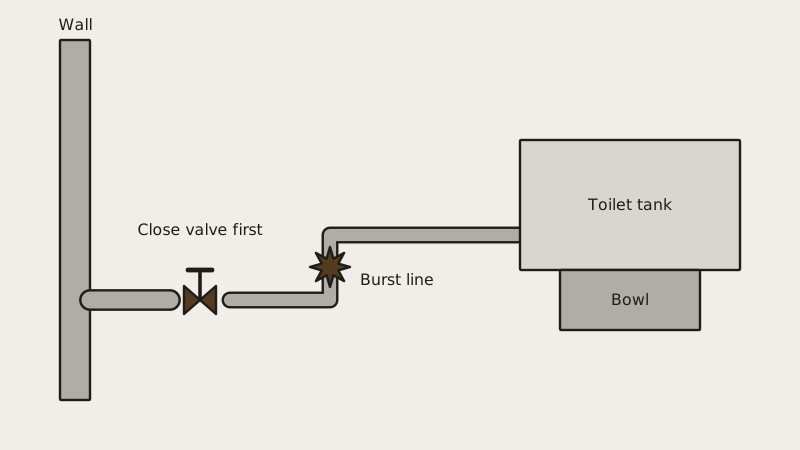
People say burst pipe, but the failure is usually the flexible connector between the wall and the tank, a braided or plastic hose that aged. Water spreads under vinyl and tile quickly and soaks drywall, so dry the area for days, not minutes, to avoid mold. Swap every supply hose in the house that is the same age, since they tend to fail alike. A seized or corroded wall valve is a plumber's job, and toilet shutoff valve replacement explains it. If a pipe inside a wall is the source, compare against the signs of a burst pipe.
Why does the tank keep refilling or running after the repair?
Four usual reasons: a chain pulled too tight, a flapper that does not suit the valve opening, scale on the seat, or a fill valve adjusted so high that water trickles into the overflow tube. Each takes a minute to rule out.
Press the flapper down by hand and see if the tank stops. Check where the waterline ends against the overflow rim. Wipe the seat and repeat the dye test. Hard water adds a local twist: Pasadena Water and Power reported 202 to 256 ppm hardness for 2025, and mineral scale can foul seats and floats, so a repair may not last as long here as it would on softer water. For a leak at the floor, see toilet leak help.
At what point does a plumber make more sense?
When the wall valve will not close, porcelain is cracked, water collects around the base, or a brand-new part still fails to seal. A burst line you cannot stop counts as an emergency, so shut the house main and call for help.
Cracked porcelain cannot be mended. A base leak can rot a subfloor, a risk in older Pasadena bathrooms with wood floors. We arrange a plumber who comes to the house, and the quote page is where to begin. Describe the toilet's brand and age and what you have already replaced, so the right parts ride along.
Common questions
How much water can a running toilet waste?
From a barely audible trickle to many hundreds of gallons in a day, depending on the gap. Federal guidance only commits to "thousands of gallons a year" for a worn flapper. Run the dye test, fix the part, then watch the next bill for the drop.
Should I attempt the fill valve repair myself?
Most people can. The part is cheap, no torch is involved and common tools do the job. The two risks are overtightening plastic nuts and a loose joint that drips for days, so work slowly and test twice. Stop if the wall valve refuses to close.
How long does a plumber need for a fill valve?
Usually under an hour once the plumber arrives with the right parts. A stuck wall valve, a tired supply line or a cracked tank adds time, since each needs its own fix before the new valve can be tested. A visit window is set when you book.
What should I confirm about a plumber before booking?
Verify the contractor license number with the state board before the visit. Ask whether parts, a fresh supply line and a new shutoff valve are included in the price, and whether a trip fee applies. Get every answer on paper, so the final bill holds no surprises.
The rest of our guides start from plumber across Pasadena.
Sources
Page updated