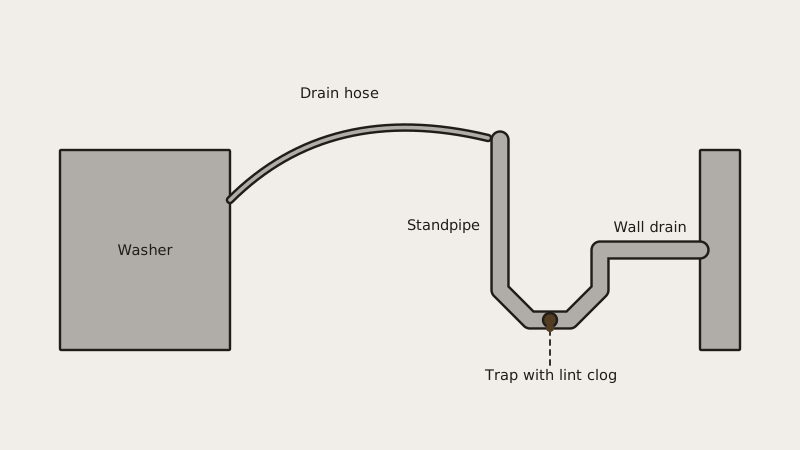
Pull the washer's drain hose out of the wall pipe, drop its end into a bucket and run a drain cycle. If the bucket fills quickly, the machine is fine and the clog is in the house drain behind the wall. If the water dribbles, the problem is inside the machine, in the pump filter or hose. That single test saves most people a plumber's visit or a wrongly ordered pump. The wall-side clog is where our drain clog plumber page and the quote form come in.
Is the clog in my washer or in the house drain?
Run the bucket test. Unplug the machine, lift the drain hose out of the standpipe and aim it into a large bucket, then restart a drain cycle. A strong gush into the bucket clears the machine and blames the house drain. A weak trickle, a humming pump or an error code points to the machine.
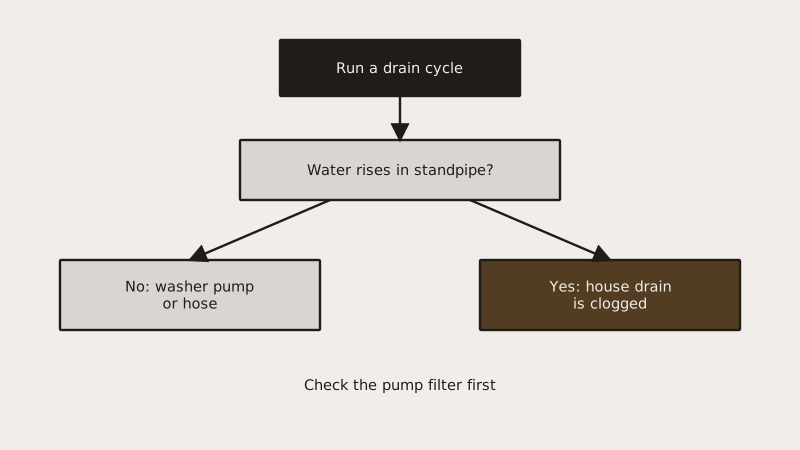
A second clue is where the overflow shows up. Water spilling out of the wall pipe during the drain or spin stage usually means the household line cannot take the flow. A tub that stays full of water at the end of the cycle suggests the machine's filter, hose or pump. Gurgling from nearby sinks or a toilet while the washer drains means the drain line is shared and partly blocked.
How do I clear the pump filter on the machine?
On most front-loaders, open the small panel at the bottom front, set a shallow pan underneath and slowly turn the filter counterclockwise. Water will come out, so release it in stages. Pull the filter, clean out lint, coins, hair ties and socks, check the opening behind it, then refit it and run a drain test.
Top-loaders are different: many have no user-serviceable filter, and the drain hose and pump sit behind a panel or under the tub. Check your manual before taking anything apart, and always unplug the machine first. Check the drain hose for kinks where it runs behind the washer. A crushed hose looks exactly like a clog.
If the filter is clean, the hose is straight and the machine still drains slowly, the pump itself may be weak, and that calls for an appliance technician instead of a plumber.
What clears the wall pipe and the line behind it?
Take the hose out, put a hand-cranked drain snake of about 15 to 25 feet into the standpipe, and crank clockwise until it meets the plug. Work it through, withdraw it, and flush with several minutes of hot tap water. Never push a snake into the washer itself.
Laundry lines clog with a sticky paste of lint, detergent residue and body oils, and cleaners aimed at hair or grease often do little to it. If a gallon of very hot water, not boiling, plus an enzyme product softens it, good; bottled openers carry the usual risks and do not belong in a line that is backed up. The same order applies as in clearing a kitchen sink: tools before chemistry.
Why does the standpipe overflow?
Because water enters the wall pipe faster than the line below it can carry it away. A partial clog is the usual reason. A trap that is too small, a standpipe too short or a drain hose shoved down so far that it seals the pipe can each cause overflow or siphoning.
The rules for the setup are in the plumbing code. California Plumbing Code summaries describe a washer standpipe fed by a trap and trap arm of at least 2 inches, rising from 18 up to 30 inches over the trap weir. Measure from the trap, not from the floor. These numbers are worth confirming with your city building department before you alter anything, and a plumber can check them in minutes. Never cram the hose tightly into the pipe; it should sit loosely, with a loop at the top, so air can enter.
Why do washer drains clog in Pasadena homes?
Lint, detergent and hard water are the three ingredients. Pasadena Water and Power's latest report puts local hardness around 12 to 15 grains per gallon, so hard water makes soap form curds that refuse to rinse away, which then bind lint into sludge. Laundry in older houses often drains through a long run of iron or galvanized pipe, where the paste clings to rough walls.
In many older Pasadena houses the laundry sits on a back porch or in the garage and ties into an aging line. When that line also serves a kitchen or bathroom, a clog in one fixture can back up in another. A blocked roof vent can slow drains too; a clogged drain vent explains the symptoms.
What keeps it from happening again?
Clean the machine's pump filter every few months, fit a mesh lint catcher on the end of the drain hose and empty it often, and tip a few quarts of hot water into the standpipe monthly. Use the detergent amount on the label, and an HE product in a high-efficiency machine. Pockets get emptied, not ignored.
Do not overload the machine, which pushes more lint and suds into the line. If a plumber has cleared the line, ask for a camera look at the same visit to learn whether roots, a sag in the run or a crushed section lies behind repeat clogs. For the usual visit fees, the cheap plumber near me guide lists the ranges. On licensing: California sets the contractor license threshold at $1,000 combined, which a plain drain clearing seldom reaches and a pipe replacement can.
Common questions
Why does my washer drain slowly but not stop?
A partial blockage is the likely cause, either a dirty pump filter in the machine or a lint and soap layer in the drain line. Run the bucket test to tell which. If the bucket fills fast, the household drain is narrowed and needs clearing before it fully plugs.
Will a plunger work on the wall pipe?
A plunger can help on a standpipe, but only with a tight seal and with the machine disconnected from the pipe. Many standpipes are too narrow or have the trap too close for a plunger to push the plug. A hand snake is the better tool. If the water does not budge, call a plumber.
How often should I clean the washer's drain filter?
Every one to three months is the usual advice for front-loaders, more often with pets, heavy loads or towels that shed lint. Your manual has the exact interval. A filter that has not been cleaned in a year may hold a surprising amount of debris.
Does an overflowing standpipe count as an emergency?
Handle it as urgent. Stop the machine, pull the plug and move anything that dislikes water. Water can creep into walls or the room below, and a laundry beside living space raises the stakes. Mop up, run the bucket test, and book a plumber when the house line is the culprit.
What should clearing a laundry drain cost?
Pricing follows the job or the hour, with visit fees commonly quoted near $100 to $250, and a basic clearing often fits inside one service call. Camera work or broken-pipe repair costs more. Get the quote in writing, with any camera or access charge listed.
Our other plumbing services are on the Pasadena Pipe Works home page.
Sources
- California Plumbing Code section 804.1 and Table 702.1 on clothes washer standpipes, as quoted in code summaries; confirm with the local building department
- Appliance and plumbing guides on clearing washing machine drains from several publishers, checked November 2026
- California Contractors State License Board, what kind of contractor do you need
- Pasadena Water and Power, water quality FAQs
Page updated