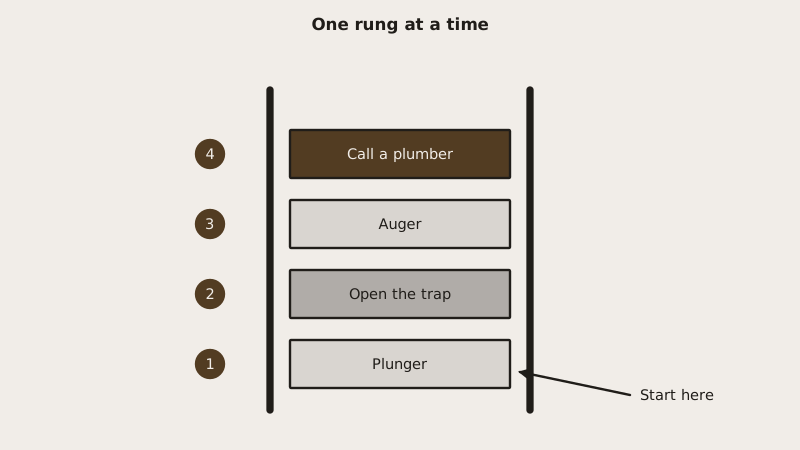
A kitchen sink that holds a grey pond after the dishes is rarely a mystery. Cooking fat cools inside the pipe, grabs coffee grounds and rice, and builds a plug a few feet downstream of the drain opening. The cure is a ladder: start at the bottom rung with a plunger, climb to the curved trap under the cabinet, then a hand-cranked auger. Chemical openers are not on the ladder at all. If a second fixture backs up along with the sink, the blockage has moved beyond it, and our drain clog plumber page is the place to go. The quote form puts a visit in motion.
Which rung comes first?
The plunger. Bail the pond down to a couple of inches, lift out the strainer basket, and seat a flat-bottomed cup plunger over the opening. Stuff a damp rag in the overflow slot or the second basin's drain so the pressure has nowhere else to go, then pump about fifteen firm strokes and snap it free.
With a disposal, switch it off at the wall before anything else and keep fingers away from the chamber. A disposal that hums and will not spin has a reset button on its underside and a hex socket for hand-turning the plate. Very hot water from the tap helps soften fat. Boiling water straight from the kettle into a standing sink can crack porcelain and warp plastic parts, so skip it.
Water that sinks after plunging deserves a minute of the hottest tap flow and a spoonful of dish liquid to push the film on its way. Water that gurgles and stays means the trap is next.
How do I open the trap without making a flood?
Slide a pail below the bend and unscrew the two chunky plastic collars, fingers first and pliers only if they are stuck. The bend then lowers into the pail. Scoop out the sludge, scrub the inside with a bottle brush, check the stub of pipe going into the wall, then fit it back with the washers lying flat, open the tap and watch each joint for a weep.
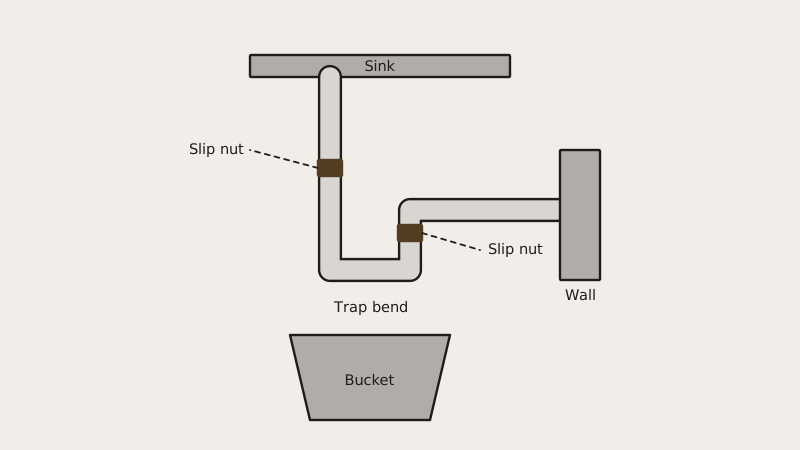
Wear rubber gloves; the contents smell as bad as you expect. A wedding ring or a teaspoon in the bend is a classic find. Snug the nuts with fingers plus a gentle quarter turn, since plastic threads strip without warning. A clean trap with the sink still sluggish pushes the culprit farther down the line.
When does the auger earn its keep?
When the trap is spotless and water still lingers. Feed the tip of a small hand auger into the pipe that disappears into the wall, lock the thumbscrew, then crank and push until the coil meets resistance. Jiggle it in and out to chew or hook the plug, draw it back, and flush with hot water.
Stay with a hand tool and light pressure; power augers and force can scrape old pipe or kink the cable. If the sink clears and sulks again within a week, grease has coated the pipe wall deeper in, which a plumber's longer cable or camera can reach. A different cause of sluggish, gurgling drains is covered in a clogged drain vent.
Does the soda-and-vinegar fizz do anything?
On a fresh, mild slowdown it helps a little, chiefly by loosening film, yet it cannot melt a solid grease plug. Tip in half a cup of soda, follow with half a cup of vinegar, cap the drain for fifteen minutes and rinse with hot water. One round that changes nothing means stop repeating it.
Bottled openers deserve suspicion. Their caustic ingredients can harm pipes, older ones most of all, and an opener that fails leaves a corrosive pool sitting in the bend for whoever opens it next. If you have poured one, say so, protect your eyes and hands, and ventilate. After skin or eye contact, Poison Control takes calls on 1-800-222-1222. Enzyme products work gradually and belong to upkeep, not to rescue.
Why do kitchen drains clog in the first place?
Grease leads the list, ahead of coffee grounds, rice and pasta, eggshell fragments and fruit stickers. A pan of hot fat looks like water until it meets cold pipe. Guidance from LA County's Sanitation Districts is to wipe pans, collect grease in a covered container and bin it, never tip it into the plumbing.
Habits that help: scrape plates into the trash, fit a mesh strainer, run hot water briefly after greasy dishes, and keep stringy peels out of the disposal. Pasadena's water is hard, at 12 to 15 grains per gallon according to the utility's latest report, and mineral film inside a drain gives debris something rough to cling to.
Rough walls matter more in old houses. Kitchens in 1920s to 1950s homes often connect to iron or galvanized waste pipe whose inner surface has scaled, so fat snags faster than in smooth modern plastic. Frequent repeat clogs in such a house are a reason to have a plumber look inside.
When is it time to put the tools down?
Stop when the plunger, trap and hand auger have all failed, when the clog creeps back in a few days, or when other drains join in. Sewage in a tub, gurgling toilets or a sewer smell mean the blockage sits well beyond the sink, in the branch or the main line, where a plumber's equipment and camera belong.
One stubborn sink clog is typically a small job, and for visit fees and hourly rates the cheap plumber near me guide lays out the range. The state's contractor license rule begins at $1,000 once labor and parts are added up. A simple drain clearing seldom gets there, though a broken pipe can.
Other drains have pages of their own: the bathroom sink, the bathtub, the dishwasher drain and the washer drain.
Common questions
The sink drains, just slowly. Is that worth fixing?
Yes. A partial blockage is a plug in the making, and it only tightens. Plunge, clean the trap, and change habits: strain solids, bin the grease. Slow drains that keep coming back suggest coating farther along the pipe, so a cable or camera visit may pay off.
How risky is a chemical opener in a kitchen sink?
It splashes, gives off fumes, can harm older pipe and lingers in a blocked sink where someone must reach in. Mechanical methods are safer. After using one, tell anybody who opens the trap, and Poison Control (1-800-222-1222) can advise if skin or eyes were hit.
Only one side of my double sink is blocked. Why?
The jam probably sits in that basin's tailpiece or the trap beneath it, before the two sides come together. Pull the strainer, inspect the short vertical pipe and clear that side's trap. If both sides crawl together, the plug is after the join.
The dishwasher is backing up into the sink as well. What now?
That points past the sink branch, since many dishwasher drains share the disposal or the same trap. Stop adding water. Clear the disposal and trap, and if the backup persists, call. A kinked or food-packed hose can contribute, but a shared pipe plug is likelier.
What about a kettle of boiling water?
Hot water from the tap is fine. A full kettle can crack porcelain and soften plastic fittings, which makes it a poor idea for most sinks. Use tap water and dish liquid on a grease plug, then climb to the plunger and trap.
The remaining plumbing services we arrange sit behind the Pasadena Pipe Works home page.
Sources
- Los Angeles County Sanitation Districts, guidelines to prevent sewer backups
- California Contractors State License Board, what kind of contractor do you need
- Pasadena Water and Power, water quality FAQs
- Home repair guides on clearing kitchen sink clogs from several publishers, checked November 2026
Page updated