Lift the stopper out and look at it. Nine times out of ten you will find a gray rope of hair, soap and toothpaste wound around its base, or sitting just underneath. Wipe that away, run hot water, and the basin often empties again. When it does not, the U-shaped trap beneath the cabinet is the next stop. Bigger problems, such as toilets, tubs and the main line, are handled in the wider guide to clogs and drain cleaning. Below is the order to work in, the tools you probably own, and where do-it-yourself ends.
What turns a bathroom sink into a slow drain?
A sticky plug of hair, soap scum, toothpaste, shaving residue and mineral scale. It grows on the stopper's pivot rod or at the first bend in the pipe, and each wash thickens it. A drain that gets a little slower every week signals a partial blockage that is still growing.
Soap does the gluing: it coats the pipe wall and catches every hair that follows. Hard water makes that coating tougher, and the city utility measured 202 to 256 ppm of hardness in 2025. Notice how the sink behaves. Gurgling, or draining in sudden bursts, suggests air cannot get in, so the vent may be at fault rather than a plug. The identical story plays out in a shower drain, and in the kitchen sink, where grease takes the place of hair.
Which quick fix comes before any taking apart?
Scoop out standing water, hook hair out of the opening with your fingers or a barbed plastic strip, then run hot tap water. Basin still full? Stuff a damp rag in the overflow hole and plunge with a cup plunger, about a dozen firm strokes.
The barbed strip costs a dollar or two and hauls up astonishing amounts. Boiling water can harm porcelain and old plastic pipe, and hot tap water is enough. A plunger needs a seal, so leave an inch of water in the basin and keep the cup flat on the drain. If the level falls but slowly, repeat. Should the blockage reappear within days, something is left farther down.
How do I take out a pop-up stopper?
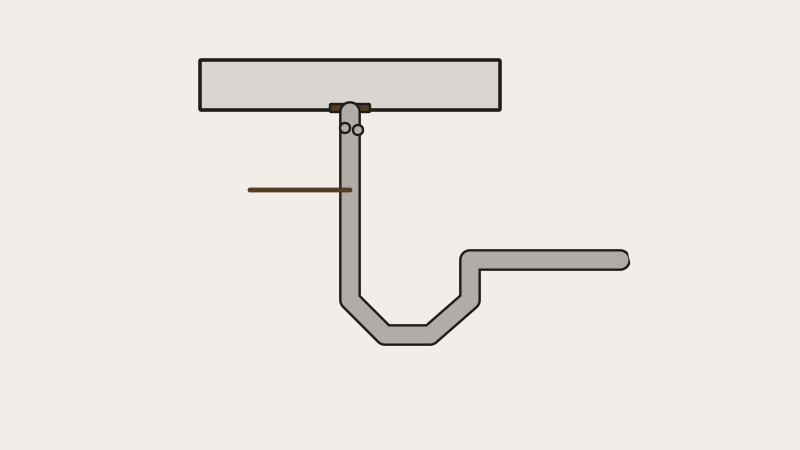
Most bathroom sink stoppers lift out once you free the pivot rod under the sink, and the hair caught on them is the usual cause of a slow drain. Work from underneath first, keep a bucket close, and follow these steps in order:
- Photograph the rod arrangement under the sink first.
- Find the horizontal rod that enters the tailpipe through a pivot ball and nut.
- Unscrew that nut and pull the rod out of the stopper's eyelet.
- Lift the stopper straight up from above.
- Wash off the slime and hair, rinse, and refit in reverse.
Some stoppers just twist and lift, or unscrew, so test before wrestling with the rod. Put a small bowl below the nut for drips. The clog is frequently wound around the lower end of the stopper. With it out, shine a flashlight into the opening and fish with the barbed strip or a taped wire hanger. A worn rubber washer on the pivot ball is cheap to replace and stops a slow drip.
How do I empty the P-trap?
With a bucket underneath, unscrew both slip nuts, lower the U-shaped section, and tip the sludge out. Rinse it, check the rubber washers, then reassemble with the nuts finger-tight plus a slight extra turn. Fill the basin afterward and watch each joint.
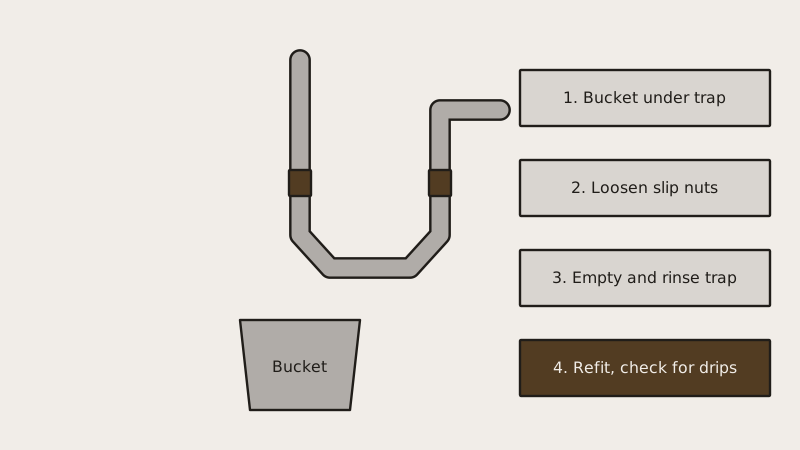
Expect a splash, because the trap keeps water on purpose to block sewer gas. Most of the gunk collects there. Poke a finger or the strip into the wall pipe it joins. Refit in order, and never crank plastic nuts. Metal traps in an old bathroom may have seized or rotted nuts, and forcing them can crack a pipe, so that is a fair place to stop and phone for help. For drips afterward, see fixing a leak under the sink.
Is bottled drain cleaner a good idea?
Not really. These liquids can burn skin and eyes, release fumes, and attack older pipes and fittings. If they fail, the trap holds a hazardous soup that splashes whoever opens it next. Mechanical clearing works better on hair and is safer.
Never combine products. After a splash on skin, or if anyone swallows some, the Poison Help line, 1-800-222-1222, will advise; use 911 if a person collapses or struggles to breathe. Tell the plumber about any chemical you poured before they arrive, so they can protect themselves. Enzyme products are milder and slow, and a matted wad of hair is beyond them. To prevent repeats, drop a mesh hair catcher into the opening and rinse the stopper monthly. Professional drain cleaning services use cables and cameras for what a hand tool cannot reach.
At what point does a sink clog mean something bigger?
If several fixtures run slowly, the sink gurgles, water appears in the tub or toilet, the clog is back within weeks, or smells show up, the blockage is probably downstream: a branch or main line, a blocked vent, or tired pipe.
Craftsman-era and mid-century Pasadena houses often keep original drains of cast iron or clay that scale up and fill with roots as decades pass. A sink that clears and clogs again might reflect that. Compare with a blocked drain vent and read about old cast iron pipes. A plumber's cable or camera finds the cause. On cost, read what unclogging a toilet or drain runs; one national guide lists sink, tub or shower clogs at about $100 to $350, and your quote settles the real figure. To book, use the quote form. The cities we cover are under where we work, while the home page lists our other services.
Common questions
What does clearing a sink do to my afternoon?
Pulling the stopper and flushing takes roughly ten minutes, and the trap adds fifteen to thirty. A cable pass by a plumber normally fits inside an hour. If a camera or a deeper job is needed, the quote should give a time estimate.
What should I put to the plumber?
Learn where the blockage was, whether a camera went in, what caused it and whether other fixtures are involved. Have the quote written with inclusions listed, look up the contractor's California license with the state, and ask how to prevent a repeat.
Does an adult need to stay?
Yes: someone must show the sink and approve the quote. Empty the cabinet beneath it and clear the floor first, and mention any chemical you poured. Most visits are short, though a deeper clog can take longer, so leave some slack in the day.
What usually ends up in a bathroom drain?
Mostly hair and soap, followed by toothpaste, shaving debris, cotton swabs and bobby pins. A ring or small object dropped in often lands in the trap, where it can be fished out, and a mesh cover over the opening catches nearly all of it.
Sources
Page updated