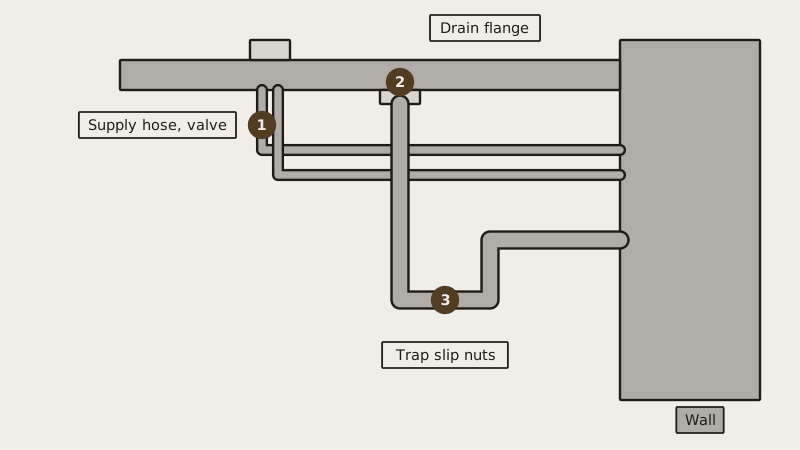
Dry the cabinet, then feel your way along the pipes with a paper towel until one spot turns wet. That spot is the repair. A drip on the supply side often needs just a little more nut tension or a new braided hose, while a drip on the drain side usually means a loose slip joint or a cracked trap. If you see corroded metal, spray, or damp in the wall behind, stop and call. This topic sits beside our shower and fixture repair page.
Ahead: how to locate the leak, a joint-by-joint fix list, temporary patches, the legal line for repairs in Pasadena, and the cost of ignoring a slow drip.
Which joint is the culprit?
Clear the cabinet, towel off every pipe and fitting, and tuck a dry paper towel under each joint, then run the faucet and later the drain. The first towel to darken marks the leak. Water that shows only while the faucet runs is a supply-side or faucet leak, and water that shows only while the basin empties is a trap or drain leak.
A systematic approach saves time:
- Supply side test. Turn the faucet on for a minute and shut it off. Watch the shutoff valves, the braided hoses and the faucet shanks. Drips here are under constant pressure and keep going.
- Drain side test. Fill the basin, then release the water. Watch the tailpiece, the trap, the connections to the wall and the drain flange. These leaks appear only during draining.
- Look up. Water on the cabinet floor can arrive from above: a cracked faucet base, a bad basin seal or a dripping connection on the faucet underside.
- Check the bottom of the cabinet. Swollen particleboard and stains show a slow leak that has run a while.
Take a photo of each joint and the cabinet floor. If an insurer or landlord asks later, you will have a record.
The EPA reports that leaks waste upwards of 9,300 gallons a year in the average home, with about nine percent of homes losing 50 gallons or more each day. Even a small drip under the sink is worth stopping for the water bill, and leaky faucet and bill explains the arithmetic.
What fixes each kind of leak?
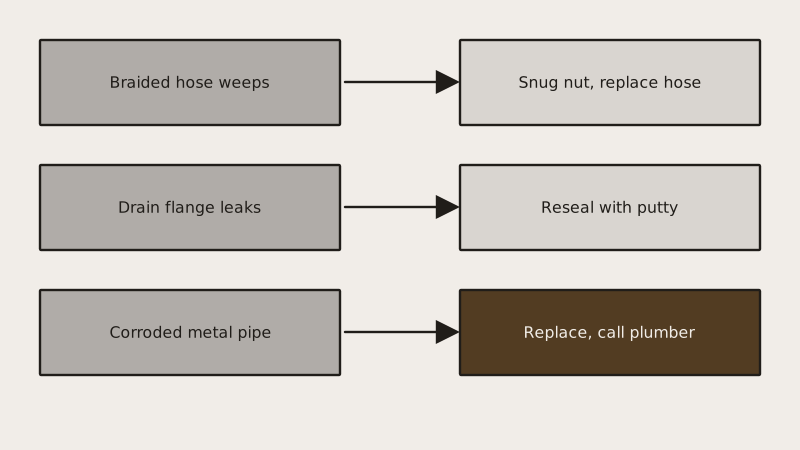
Snug a weeping nut a little, first by hand and then with a wrench. Replace a worn braided hose, a cracked trap or a failed washer. Service the shutoff stem or packing if the valve itself drips. Reseal a leaking drain flange with fresh plumber's putty. Match the repair to the joint, and swap old parts rather than overtighten them.
By joint:
- Shutoff valve stem. A drip beneath the handle often stops once the packing nut is turned a quarter. If not, the valve needs replacing; the guide to toilet shut-off valves deals with the same style of valve.
- Braided supply hose. Snug the nut, and if it weeps, replace the hose. They are inexpensive and wear out in years.
- Faucet shank or base. A leak around the faucet body may need a new gasket or O-ring. Walkthroughs live in fixing a leaky faucet.
- Drain tailpiece or flange. A leak under the drain opening means the putty or gasket has failed. Remove the drain, clean the seat, and reseal.
- Slip nuts at the trap. Loosen them, check the washers, seat them flat, and retighten by hand plus a small extra turn.
- Cracked plastic trap. Replace it. A cracked trap cannot be patched with any lasting result.
- Corroded metal pipe. Do not patch. Replace the section or call a plumber.
Gently does it. Overtightening a plastic nut cracks the thread and turns a drip into a stream.
For a plastic line, see our guide to stopping a leak from plastic pipe. For copper, repairing a leaking copper pipe explains which steps an owner can attempt.
Can I use a temporary patch?
Yes, but only as a stopgap. Two-part epoxy putty, self-fusing silicone wrap and a rubber-lined repair clamp can slow a pinhole or hairline leak until a proper repair is made. They do not suit joints under pressure for long, and they should be replaced soon. Close the shutoff valve whenever you leave the house until the permanent fix is done.
How to use each:
- Epoxy putty. Dry the pipe, knead the putty, press it over the leak and hold it. Follow the label for cure time, and do not turn the water on until it has cured.
- Self-fusing tape. Wrap it tightly with each turn stretched and overlapped. It is helpful on a small pipe leak.
- Repair clamp. A rubber-lined clamp can hold a small split on a pipe. It must fit the pipe diameter exactly.
- Bucket under the trap. Not a repair, but it saves the cabinet while you wait.
Never use tape or putty on a leaking shutoff valve body, on gas, or on hot-water lines at their limit. If a pipe is bulging or corroded through, a patch will not hold.
Shut the valve feeding the sink, or the main shutoff when that valve is stuck. Pasadena Water and Power says the main valve is generally found where supply enters the house, and its water emergency line is 626-744-4138.
Is a permit needed for this repair?
Not for a repair. The City of Pasadena's exemption sheet says no plumbing permit is needed for stopping leaks in drains, water, soil, waste or vent pipe, or for repairing leaks in pipes, valves or fixtures, provided the repair does not replace or rearrange valves, pipes or fixtures. If a concealed pipe is defective and must be replaced, that is new work needing a permit and inspection.
In practice, tightening a nut, replacing a washer or a hose is a repair. Replacing a trap or a shutoff valve is a gray area, and a replaced valve may count as new work, so call the Building and Safety Division at 626-744-4200 if you are unsure. Replacing concealed or wall pipe is the plumber's job and normally involves a permit.
A contractor license becomes a legal requirement at $1,000 in parts and labor, or whenever a permit enters the picture. Small repairs below that line are within an owner's rights; larger or hidden work is not.
At what point is professional help warranted?
Call when the pipe is corroded, the water is coming out of the wall, the shutoff will not close, water is spraying, the cabinet floor has gone soft or moldy, or your repair failed to stop the drip. Pipes in older Pasadena homes may be galvanized or old copper that fails when disturbed, so call early rather than forcing a stuck fitting.
Hard water is a factor. Pasadena Water and Power's 2025 report lists hardness of 202 to 256 ppm, and mineral crust bonds old nuts and valves and wears seals. A fitting that has not moved in twenty years may leak the moment you touch it. Let a plumber replace the whole assembly rather than chase one joint at a time.
Water damage grows quickly. The EPA advises fixing plumbing leaks promptly and drying everything thoroughly, and treats mold spread across roughly 10 square feet or more as a reason to consult a professional. Porous cabinet bottoms that stay wet may have to be replaced.
Silent leaks also show up in the meter and the bill. Try the EPA's meter test, and read why your water bill climbs or the guide to telling if a pipe has burst if you suspect more than a drip.
A plumber can replace supply lines, valves, traps and drain assemblies in one visit. A flat price would be misleading since it varies with parts and access, so the number arrives in a written quote. For fixture jobs, faucet installation cost shows related prices. To book, use the quote request, see how it works, and browse the home page for our other services. If the basin also drains slowly, clearing a bathroom sink covers that side.
Common questions
What lifespan can I expect from sink plumbing?
Plastic traps can last decades unless cracked. Braided supply hoses are usually replaced every few years to a decade, and old metal pipes and valves corrode over time. Hard water shortens their life. Replace supply hoses when you see rust, bulges or weeping at the crimp, and consider doing both hoses at once.
What do I put to a plumber before hiring?
Find out whether the price includes every part you need, such as hoses, a trap and a valve, whether the other shutoffs get checked, what happens if a hidden problem appears, and what the repair warranty covers. Ask which contractor license stands behind the job, then look that license up with the state.
Must I be present for the work?
A grown-up must unlock the door and approve the price, and afterward you can usually stay close. The cabinet needs clearing and the path to it kept open. If you cannot attend, name a trusted adult. Sink repairs rarely take long.
Is plumber's putty or silicone better for a drain?
Plumber's putty is traditional for a basin drain flange, and many manufacturers specify it, but check the instructions for your drain and sink material. Some stone and plastic fixtures call for silicone. Use what the manufacturer says, clean the seat first, and test with a full basin.
Will a leak under the sink damage my home?
Yes, if it runs for long. Water soaks the cabinet, swells wood, grows mold and can reach the floor or the wall behind. A small leak caught early costs little. A hidden leak may cost far more. Dry the area promptly and fix the source, and check the meter if you doubt the leak has stopped.
Sources
- U.S. EPA WaterSense, Fix a Leak Week (leak waste figures, meter test)
- U.S. EPA, mold cleanup in your home (dry quickly, 10 square feet guidance)
- City of Pasadena Building and Safety Division, work exempt from permit (repairing leaks versus replacing pipes, valves or fixtures)
- Pasadena Water and Power, 2026 water quality report (2025 data)
- Pasadena Water and Power, water troubleshooting (main shut-off, emergency line)
Page updated