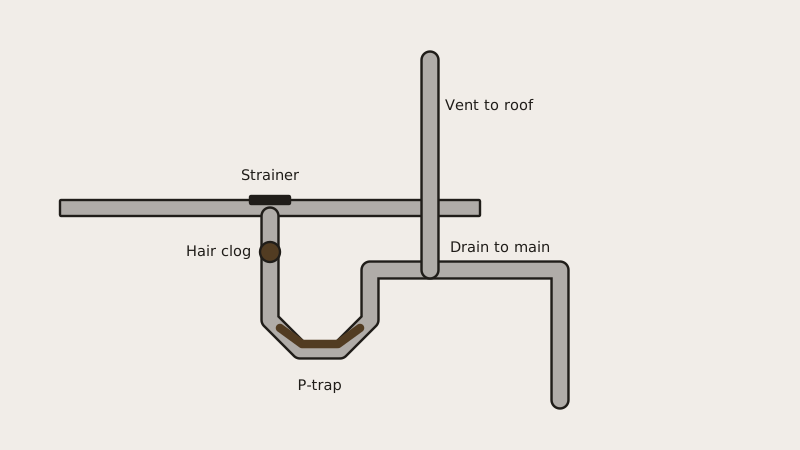
Pull the drain cover, fish the hair plug out using a notched plastic strip, then flush the line with a minute of hot water. That handles most shower clogs. When the pool of water is still sitting there after two passes, the blockage lives deeper, and a drum auger, a camera or hydro jetting is the next tool. Blockages beyond the shower get their own treatment under drain cleaning and clogs.
How can I tell my shower drain is clogged?
Standing water around your feet that lingers once the water is shut off means a clog. Gurgling, a sour smell and water that climbs the tub wall when a nearby sink empties tell the same story. A single slow fixture suggests a local blockage. Several slow fixtures suggest the shared branch or main line.
Try a quick test. Let the shower hold an inch of water, then flush the toilet and run the bathroom tap. Bubbling or a rising level in the shower means the line they share is restricted. If the shower alone misbehaves, think hair, soap and the trap right under the floor.
Local water makes this worse. Pasadena Water and Power calls its supply very hard, averaging about 12.9 grains per gallon, and calcium soap film acts like glue on a pipe wall. Long hair catches on that film and forms a felt-like mat. Expect a re-clog every few months in a house with big hair loads, even when the pipework is fine.
How do you unblock your shower drain?
Lift or unscrew the grate, put on gloves, and pull out whatever is visible. Slide a toothed plastic strip into the opening, twist it, and lift it out, hair and all. Repeat until it comes back clean, then let hot water run for sixty seconds and see how quickly the floor empties.
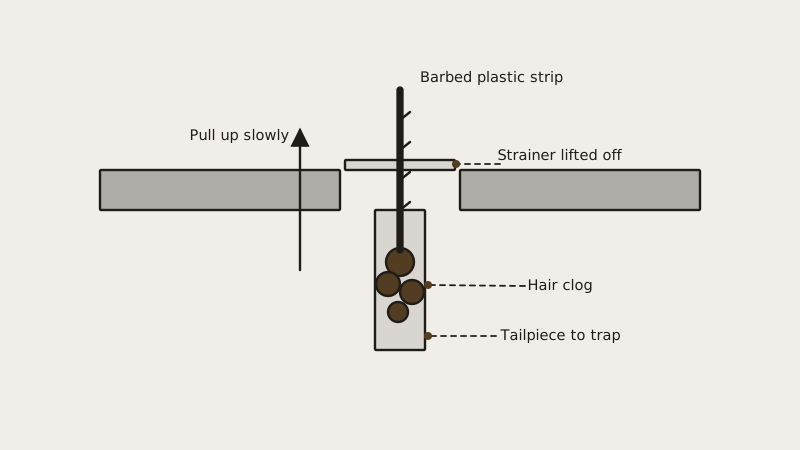
The sequence, step by step:
- Bail out standing water so you can see.
- Remove the cover. Some have a center screw, some lift off, and tub stoppers can unscrew from their post.
- Clear the strainer and the first few inches by hand. Often that is the whole clog.
- Feed a drum auger (a small hand-cranked wire coil) toward the trap. Go gently around the bend, because a kinked wire can mark an old pipe.
- Follow with the hot faucet. Skip a kettle of boiling water: it can soften PVC joints and crack porcelain.
- Plunge last, using a cup plunger, with a wet rag stuffed in the tub overflow so the force goes down, not out.
A shop vac set to liquid, sealed over the opening with a rag, can pull up soft sludge that the strip misses.
Why should you never use baking soda and vinegar to unclog a drain?
The two react into foam, then settle into salty water, which does almost nothing to a mat of hair. Hair is protein, and neither ingredient dissolves it. You get a fizzy show and the same blockage. Use a mechanical tool instead, and keep both products away from commercial cleaners already sitting in the pipe.
Commercial chemical cleaners are the bigger hazard. Many are lye or acid based. Poured into a drain brimming with standing water, they stay in contact with the pipe and fittings, can burn skin on any splash, and leave the next person, usually a plumber with a cable, working over caustic water. Never combine two products. If you tried one, say so at the door so the plumber can dress for it.
Can you unclog a drain without chemicals?
Yes, and mechanical methods work better anyway: a barbed strip, a drum auger, a plunger on a sealed fixture or a shop vac. Enzyme products digest organic film slowly, which makes them a maintenance habit, not a rescue for a drain that is fully stopped.
Habits that keep a shower flowing:
- A fine mesh catcher over the drain, emptied after each use.
- A weekly hot water flush.
- Pulling the tub stopper every month or two to clean off the hair wrapped around it.
Be honest about which case you are in. Slow water responds to cleaning. A drain that will not move at all needs a longer cable.
How do you clear a toilet, a sink, a laundry line or a vent?
A flange plunger and slow, firm strokes clear most toilets. Bathroom sinks usually need the pop-up stopper cleaned and the trap emptied. Laundry standpipes clog on lint. A blocked plumbing vent sits on the roof, and that one belongs to a professional.
Toilet. Seat the rubber flap of a flange plunger in the outlet and push steadily. After four or five rounds without a result, try a closet auger. When the tub, shower and toilet all misbehave together, stop running water and ring for help. For call-out pricing, see clogged toilet plumber prices.
Bathroom sink. Lift out the stopper and scrape off its collar of gunk, park a bucket below, then hand-turn the slip nuts on the trap. We cover it in clearing a bathroom sink.
Disposal or garburator. Cut power at the switch and at the panel. Hands stay out of the chamber. Tongs retrieve what you can see, and a hex key in the base turns the motor shaft. A blockage beyond the disposal is a kitchen line matter: see the kitchen sink guide.
Laundry line. Washers push out lint and soap faster than a standpipe likes. If suds climb up the pipe mid-cycle, stop the machine. More on that in clogged washer drains.
Vent. Gurgling across several fixtures at once can mean a leaf or nest in the roof vent. Roof work is a fall risk, so read clogged drain vents and book a plumber.
Air conditioner condensate line. A small PVC drain near the air handler grows algae slime. A shop vac held against the outdoor end often clears it. Water dripping from the unit or a system that keeps shutting off belongs with an HVAC contractor.
Which clogs need a plumber?
Book a visit when the shower is still slow after the strainer and trap are clean, when two or more fixtures are affected, when sewage odor or a floor drain starts to weep, or after any chemical cleaner. A plumber can push a longer cable, send a camera through the pipe, or hydro jet it with high-pressure water.
Pasadena has plenty of homes from the Craftsman era through mid-century. The drains underneath tend to be cast iron or vitrified clay, with rough walls that snag hair, grease and roots. A camera shows whether you face a soft clog, a root, or a collapsed joint, and each leads to a different repair and a different price. Hydro jetting handles grease, scale and roots, though on very old pipe a plumber will want a picture of the line before committing.
On who does the work: CSLB draws its licensing line at $1,000 of labor and materials, and any job that needs a permit calls for a contractor license whatever it costs. A simple clearing usually falls below that line, though a name on the CSLB lookup costs nothing to check. For a written price from a local plumber we arrange, use our quote page.
Common questions
Will a clogged shower take long to fix?
A hair plug at the strainer or trap is a 15 to 30 minute job by hand. With a cable, a plumber is usually done inside an hour. Camera work or jetting adds time. The plumber should name the next step after seeing the line, before extra work begins.
What should you ask a plumber ahead of a drain visit?
Does a flat fee or an hourly rate apply, does camera footage come with it, and will the quote arrive on paper? Check the contractor license on the CSLB lookup, and mention any cleaner you poured down the drain.
Is plunging a tub or shower safe?
It is, if you block the overflow slot with a wet cloth first, so pressure heads down the line. Use a flat-bottom cup plunger on a tub or shower floor. Do not plunge over standing chemical cleaner, since it can splash into eyes or onto skin.
How often should a shower drain be cleaned?
Lift hair off the strainer every few showers, and clean the trap area every month or two when hair is long or scale builds fast. Very hard local water speeds up the soap film that traps hair, so a mesh catcher pays for itself here.
Will hydro jetting hurt old pipes?
On sound pipe, the pressure is set for the pipe size and material, so it does not. On cracked or crumbling cast iron and clay, a plumber should look with a camera first and may choose a gentler tool. A collapsed section needs a repair, not more water.
Everything else we arrange around the San Gabriel Valley starts at Pasadena Pipe Works.
Sources
Page updated