You prevent most burst pipes with four habits: know where the main shut-off valve is and make sure it turns, check your water pressure, retire pipe that has run its course, and deal with small leaks before they weaken a joint. Frost is rarely the villain in Pasadena. If water is already gushing, skip this page and go to the burst pipe plumber page, then use the quote form to line up a visit. Everything below is aimed at the pipe that has not failed yet.
Why do pipes burst in Pasadena, if it hardly ever freezes?
Most bursts here come from high water pressure, old or corroded pipe, a hose left on an outdoor faucet, and joints worn by years of movement and water hammer. A hard freeze that splits a pipe is unusual on the valley floor, though it can happen to an exposed line during an unusually cold night.
Age matters more than weather. Plenty of Pasadena homes date to the era from 1920 to 1950, and their original galvanized steel supply lines rust from within and narrow, while copper from that era can wear thin at the elbows. Pressure does the rest: a pipe that held for decades at moderate pressure fails when the pressure climbs. Our page on polybutylene pipe covers a plastic supply pipe from a later era that has its own failure pattern.
What pressure is my house running at?
Thread a cheap gauge onto a hose bib outside, make sure nothing inside is drawing water, and read the needle. California's plumbing code wants a regulator whenever static pressure climbs over 80 psi, and plenty of plumbers set houses nearer 50 to 70. Anything above 80 means pipes and fixtures carry extra strain.
Check the number early in the morning or late at night, when neighbors are using little water and pressure peaks. If it reads high, a failed regulator is the usual reason, and the cure is a new valve or an adjustment, not a pipe repair. The pages on the pressure reducing regulator and adjusting the regulator valve describe the brass dome near your main.
If you have a regulator, a closed plumbing system may also need a thermal expansion tank, and the sources we read describe that as part of the same code section. Ask the plumber to confirm rather than assuming.
Can I find the main shut-off in the dark, and will it close?
Locate it today, not in the middle of a flood. Try the front wall by a hose bib, a garage wall, or the box where the meter sits. Exercise it, closed then open, every twelve months so it never freezes up. One that will not budge is a daylight repair.
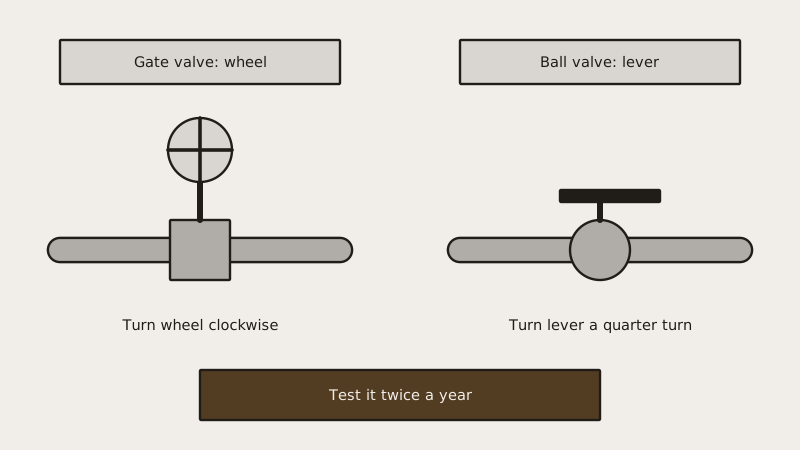
In older homes the valve may be a round gate valve whose stem corrodes and snaps, or a handle that spins without closing. A ball valve that closes in a quarter turn is the upgrade: small job, big payoff. Mark the valve with a tag, tell everyone in the house, and know where the water meter shut-off is as a backup. If trouble does arrive, recognizing a burst pipe lists the signs.
What can I check around the house this weekend?
Walk the property with a short list. Check beneath each sink, behind each toilet and beside the heater for drips, rust and green crust on copper. Disconnect garden hoses from outdoor faucets, since water trapped in a spigot can split it. Look at hose bibs for a steady drip. Check the attic and crawlspace for wet insulation and stains.
Add two checks that most people skip. Note the water meter dial at bedtime and again at sunrise with every tap closed; movement means water is escaping, a method EPA WaterSense's leak guidance describes. And glance at the ceilings below bathrooms for brown rings. A hidden leak is a burst pipe in slow motion, and fixing it early costs far less. The guide to burst pipe warning signs lists more.
Are pipes in the attic, crawlspace or outer walls at higher risk?
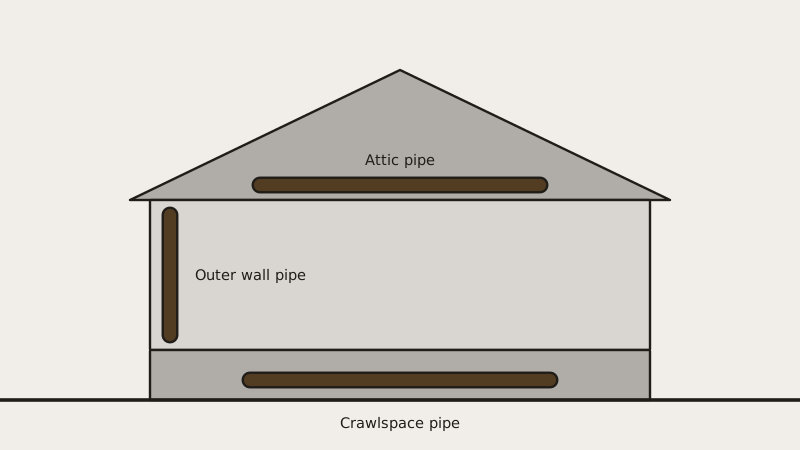
Yes, because they are exposed to temperature swings, to rodents and to movement that nobody sees. Pipes in unheated spaces can freeze on the rare cold night, and in a hot Pasadena summer attic pipes can run very hot and wear their insulation. Foam sleeves on exposed pipes are cheap, and they also reduce heat loss from hot lines.
Do not wrap or hide a leak: if insulation is wet, find out why. The page on pipes in an attic or crawlspace describes how those runs fail and what a plumber looks for. On a cold forecast, the standard guidance from the Red Cross and public utilities is to disconnect hoses, close and drain outdoor faucet lines where possible, and let a faucet drip on the coldest nights.
When should I replace old pipe instead of patching it?
When leaks keep returning, when water looks brown or rusty, when pressure drops through the house, or when a plumber finds pinholes in more than one place. Patching one pinhole in old pipe often moves the failure to the next weak spot. A full repipe is bigger, but it ends the cycle; the cost pages give the ranges.
Iron drains and galvanized supply pipe are the usual suspects in older Pasadena homes, and why cast iron pipes corrode explains how. California wants a contractor license once a job reaches $1,000, or when a permit applies, which puts a repipe in the hands of a plumber who has one. For the money side, see repairing a burst pipe and repiping a whole home.
Does hard water and water hammer affect burst risk?
They contribute. Pasadena Water and Power describes its water as hard, in the range of 12 to 15 grains per gallon in its recent report. Mineral scale narrows pipes and clogs valves, which raises local pressure and strain at joints. Water hammer, the bang when a valve closes fast, sends pressure spikes through the system and loosens fittings over time.
If you hear banging when the washing machine or a faucet shuts off, have it looked at. Air chambers or a water hammer arrester can calm it, and a regulator that is set too high makes it worse. Our page on water hammer sounds covers causes and cures.
Common questions
What usually splits a pipe in this part of California?
Excess pressure, corrosion in aging pipe and tired joints, not frost. Anything past 80 psi strains the whole system, while old galvanized or thinned copper gives way at elbows and threads. Testing the regulator and noting your pipes' age catches most of the risk before water damage begins.
Should I leave the water on when I go on vacation?
Shutting the main off costs nothing and removes the risk of a leak running for days. Close the valve, and open a faucet briefly to relieve pressure if you wish. If you have a water heater, check the manufacturer's vacation setting for gas units, and keep irrigation timers in mind, since they need the water on.
Does insulation stop pipes bursting?
Only where freezing is the threat, which is uncommon in Pasadena but possible for exposed outdoor and attic lines. Foam sleeves slow heat loss and are cheap to fit. They do nothing against pressure, corrosion or worn joints, so treat insulation as one small piece of a larger prevention routine.
How often should a plumber inspect my pipes?
No fixed schedule exists. Sensible moments are buying a house, after any leak, and every few years when the pipe dates to the 1950s or before. Ask the plumber to read pressure, work the main valve and inspect water heater connections and exposed supply lines.
Does a homeowner policy pay for burst-pipe damage?
Many policies pay for sudden bursts and exclude slow leaks or neglect, so the wording decides. Ask your agent before anything goes wrong. If a pipe does burst, close the water, photograph the damage and save receipts. The article on burst pipe insurance claims covers the usual questions.
For our other plumbing services, return to the Pasadena Pipe Works home page.
Sources
- Plumbing code summaries on the 80 psi static pressure limit and pressure regulators, California Plumbing Code section 608.2 as described by water utilities and plumbing contractors
- U.S. EPA WaterSense, Fix a Leak Week
- Pasadena Water and Power, water quality and customer information
- California Contractors State License Board, what kind of contractor do you need
- American Red Cross guidance on frozen pipes, as summarized in public-agency winter pipe guides, checked November 2026
Page updated