Indoor sewer odors usually trace back to a trap whose water has evaporated, a plugged roof vent or a tired seal under a toilet, all inexpensive to put right. If the smell keeps coming back, spreads between rooms, or arrives with sluggish drains and gurgling, suspect the sewer line itself, which calls for a plumber and usually a camera. If the rotten-egg smell could be gas, go outdoors and phone SoCalGas before you do anything else. Pasadena Pipe Works arranges the plumber if the cause turns out to be below the house.
We take the causes from simplest to most serious, cover the health question, and explain what fixing a broken sewer line means for a Pasadena house, including ways to avoid trenching the yard. A companion piece covers getting rid of the smell once you know the source.
Which four signs say the sewer line itself has failed?
Look for these four: more than one drain slowing or backing up at once, toilets and tubs that burble when water runs somewhere else, sewage odor that lingers inside or over the yard, and lawn that turns lush, soggy or sinks along the pipe's route. Any single sign is thin evidence. Two together justify a camera inspection.
Other clues worth noting:
- Sewage in the lowest drain. When the main is blocked, wastewater comes up at the lowest opening first: a floor drain, a shower or a tub.
- Damp patches or cracks in the slab close to the spot where the pipe exits.
- Rodents or insects moving up a break in an old line.
Backed-up sewage is a health risk. The City of Pasadena points out that raw wastewater is loaded with viruses and bacteria, so keep children and animals clear and phone a plumber without delay.
What causes a sewer smell inside the house?
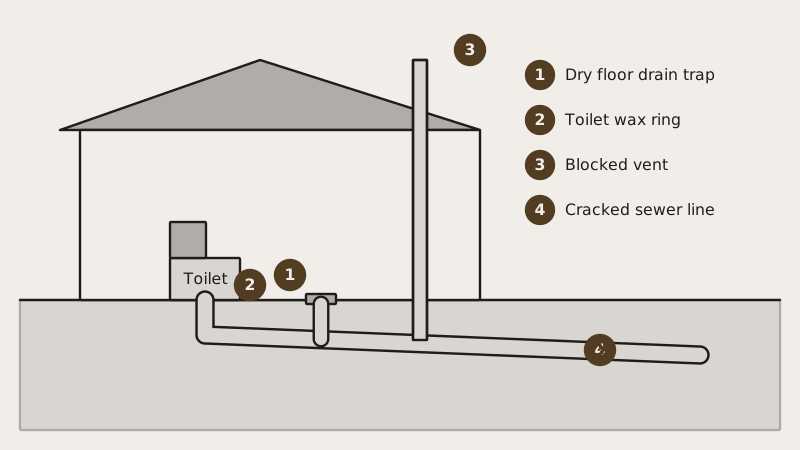
Rough order of likelihood: an empty trap on a seldom-used sink, tub or floor drain; a failed wax seal beneath a toilet; a roof vent that is plugged or damaged; a cracked drain inside a wall or the crawlspace; and last, a broken or root-filled sewer line out in the yard. The room where it is strongest points to the answer.
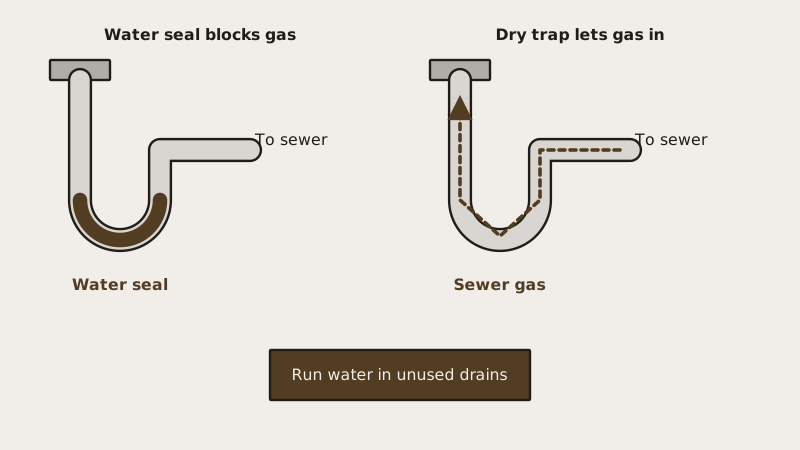
Under every fixture sits a curved trap that keeps a little water in place as a gas stopper. Leave the fixture alone and that water dries out, which can happen within weeks during Pasadena's hot summers. Run water down any drain you rarely use. A teaspoon of cooking oil floated on top slows the next round of evaporation.
A few patterns help:
- One toilet, worse after flushing. Suspect the wax ring or a loose flange, which our toilet leak page describes.
- Near a garage or laundry-room floor drain. The trap is likely dry, so refill it.
- Bathroom odor plus gurgling. Debris or a nest may be blocking the vent. We describe the symptoms in a clogged drain vent.
- Rotten egg smell from the hot tap alone. Think water heater before sewer. Bradford White's service bulletin links the odor to the tank's anode reacting with sulfur and bacteria in warm water, and replacing the anode rod is a common fix.
- Odor out by a cleanout or across the yard. Follow the line toward the street.
Can sewer gas in the house make me sick?
Most often it is a nuisance, yet it is not always harmless. Sewer gas is a blend that includes hydrogen sulfide. The federal toxic-substances agency says prolonged low-level exposure can bring eye irritation, headache and tiredness, and that higher levels dull the sense of smell, so your nose is no reliable alarm. A strong smell means get out and ventilate.
Practical safety rules:
- Rule out gas first. Utility gas is given an added scent that plenty of people compare to rotten eggs. When in doubt, walk out and use 1-800-427-2200, the SoCalGas line, from out on the street, as the utility itself advises. Skip light switches and flames.
- Open windows and run a fan to the outside while you look for the source.
- Never mix bleach with ammonia-based cleaners in a drain to mask the odor, because the combination releases toxic gas.
- Get medical advice if anyone has headaches, nausea or breathing trouble that clears when they leave the house.
Sewer gas can also contain methane, which burns, so keep open flames out of a room that smells strongly.
How can I track down the source myself?
Go room by room with a flashlight, begin with the fixtures nobody uses, and let water run in each for a minute. A smell that fades was a dry trap. One that stays strongest at a toilet sends you to its base, to check for rocking or damp. One that peaks outdoors, or at the bottom-most drain, implicates the sewer line.
A step-by-step order that saves time:
- Refill every trap: guest bath, laundry standpipe, floor drains, garage drains.
- Push on each toilet and feel around the base for moisture.
- Sniff the tub and shower overflow openings and the washing machine standpipe.
- Glance at the roof vents only if the roof is dry and you are steady up there. Otherwise a plumber can do it.
- Locate the cleanout, a capped stub of pipe on the lawn or against an exterior wall.
- Write down when it happens. After rain, after laundry or only at dawn each suggests a different culprit.
When does the smell mean the line needs work?
If the odor survives refilled traps and checked seals, or you recognize the signs above, get the line inspected. A plumber feeds a small camera down the pipe to look for cracks, sags, roots and offset joints. That matters here because many older Pasadena houses were plumbed with clay or cast-iron sewer pipe, and those materials crack, shift and admit roots over the decades.
Pasadena's municipal code puts the house sewer on the property owner, defined as starting 24 inches from the building wall and reaching the city main, including the stretch beneath the street. The city looks after the main. Public Works names roots and grease as the usual blockage causes, suggests a cleaning and inspection once a year, and advises keeping root-hungry trees off the line. Blockages in the city system are rare, it says. Sewage rising from a manhole goes to the City Service Center on 626-744-7311.
Roots are one cause; others include a bellied or sagging section, a collapsed joint and old cast iron that has corroded through. Our page on cast iron pipes covers how that material ages.
What are the repair options, and will the yard be dug up?
Not always. Sewer line repair can mean digging to the break and swapping out that section, or trenchless sewer repair, which works from inside the pipe. One trenchless route is cured-in-place lining, where a liner soaked in resin is pulled through and hardened into a fresh pipe inside the damaged one. It disturbs less of the yard, though it does not suit every kind of failure.
Whichever method a plumber recommends, you should hear the reasons:
- Dig and patch. Suits one short bad section. The ground is opened, so ask who restores the lawn, patio or driveway and who pays.
- Lining. Seals cracks and joints without a trench while the pipe is still round.
- Full replacement. The answer for a crushed, badly offset or wrongly pitched line.
Each can involve a permit plus an inspection, and some reach under the street, which is Public Works territory, so confirm what applies before work begins. Ask to see the camera footage as well. The visits we arrange are outlined under plumbing services and maintenance plumbing.
When is it time to phone a plumber?
Ring one if the odor lingers beyond a day or two after the traps are full, if the drains burble or back up, if sewage reaches a floor drain, or if the yard smells. Never wait when wastewater is rising indoors. Begin on the quote page, and browse the rest of our work from the home page.
Common questions
How long until someone finds the cause?
A dry trap shows itself within minutes. A camera run along the sewer line is typically one short visit, though it depends on how easily the cleanout opens and how long the run is. If repair turns out to be necessary, the plumber prices that work and its timeline separately.
What should I check before agreeing to a repair?
Jot down the contractor's license number and cross-check it with the state board. Does the price include a camera run with written findings? Ask which repair options exist, trenchless among them, and what restoring the yard would add to each. Have the figure on paper before a shovel moves.
Is it possible the smell comes from my water heater?
Sometimes, and the clue is a rotten egg odor from the hot tap alone. A Bradford White bulletin ties that to the tank's anode reacting with sulfur and bacteria in warm water. A smell at both taps, or one rising from drains, points back to traps, vents and the sewer line.
Why does the smell appear after rain?
Rain can change the air pressure and moisture around the vent stack, push gas back toward a dry trap, or soak into a cracked line or a poorly sealed cleanout. It can also bring a smell from a leak in the yard. Fill the traps first. If the smell persists, have the vents and the line looked over.
Sources
Page updated