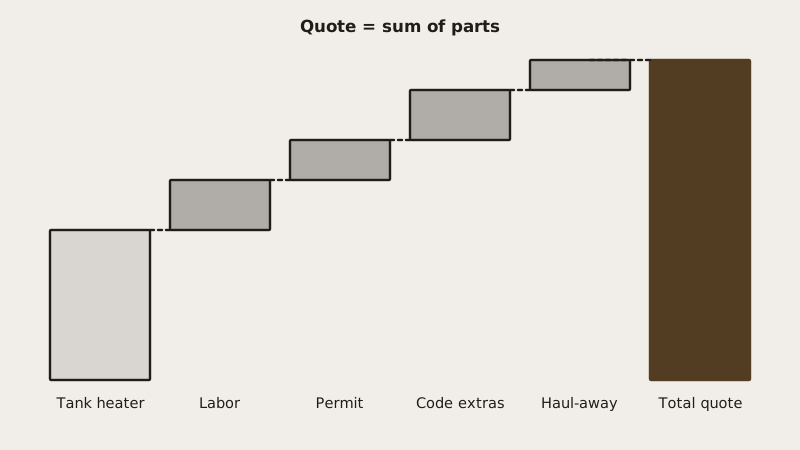
Cost guides that draw on Angi data land the average replacement near $1,350, and most jobs fall from about $880 to $1,830. Split by type, gas tanks are listed at $700 to $2,700, electric tanks from $600 to $3,500, tankless from $1,400 up past $3,900. Think of these as signposts only. Permit rules, where the heater sits and any code corrections can shift the total, and the written quote is where it shows.
The sections below take the bill apart so a quote is easy to read. The larger decision lives on our water heater replacement hub.
What does a water heater replacement usually cost?
Swapping one tank for another commonly lands around $900 to $1,800, inside a wider $600 to $3,500 spread that depends on fuel and size. Tankless sits near $1,400 to $3,900 in the published guides, higher once gas pipe or venting changes. The firm figure comes from a plumber's written quote after looking at your heater.
| Type | Guide range, installed | Main variables |
|---|---|---|
| Gas tank | $700 to $2,700 | Capacity, venting, code upgrades |
| Electric tank | $600 to $3,500 | Capacity, wiring, heat pump models |
| Tankless, simple swap | $1,400 to $3,900 | Condensate drain, controls |
| Tankless, first-time conversion | Set by written quote | Bigger gas pipe, new vent, wall work |
Sources disagree at the edges, because much published pricing comes from contractor and affiliate sites, so the middle of each range is the safer guess. More numbers sit on our replacement price page, and the most common local setup is priced in the gas heater cost article.
Why does one quote come in higher than another?
Size, fuel, location and code work drive the gap. Fifty gallons costs more than forty. Relocating from a closet to a garage, adding a drain pan, changing the venting, fitting a new expansion tank, or wrestling out a corroded old unit all add labor. Easy access and a straight swap sit at the bottom.
Line by line, a quote may include:
- The heater itself. Entry-level 6-year tanks cost less than longer-warranty models.
- Labor and haul-away. Removing the old tank, which is heavy and full of sediment.
- A permit and inspection. The City of Pasadena requires a plumbing permit whenever a water heater is replaced.
- Earthquake strapping. A California statute requires new and replacement heaters to be braced, and the city inspects it.
- Safety parts: a relief valve with its discharge line, a fresh gas flex connector or shutoff, and sometimes an expansion tank where a pressure regulator is installed.
- Venting and air supply for gas models.
- Code upgrades the inspector may call for on an older installation.
Permit fees vary by source, and we found no official schedule in what we read, so have the contractor list it as a separate line.
What lifespan should I expect from a heater?
The federal Energy Department gives storage tanks 10 to 15 years and most tankless units more than 20. Real life depends on water quality, maintenance and how well the anode rod was kept up. Pasadena's very hard water, near 13 grains per gallon in recent reports, can shorten the life of a tank.
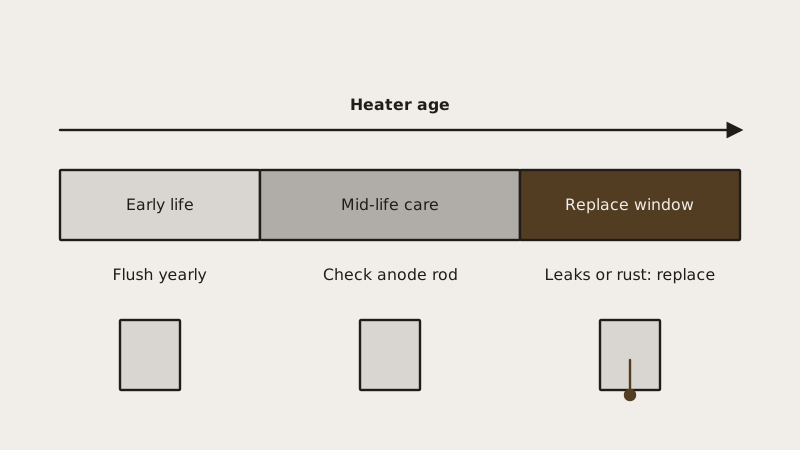
Warning signs: rust-colored hot water, a rumbling tank packed with scale, dampness around the base, and repair visits that keep coming back. A leaking tank past ten years should be replaced, since a failed shell can't be patched. Age signals are laid out in how often a water heater gets replaced, and anode rod replacement is the one maintenance step that can add years.
Check the date on the rating plate. Most brands encode the manufacture date in the serial number, and the date tells you whether you are inside a six-year tank warranty.
When does repair beat replacement on cost?
Repair makes sense for a heater younger than about ten, with a sound tank and a small failed part. Replacement wins if the shell leaks or repairs would soak up much of a new unit's price. A thermocouple is small; a rusted-through tank is final.
When a repair quote approaches half a new heater's price on a unit past ten, replacement usually wins, since repairs on an aging tank tend to repeat. That is our reasoning, not a rule. Symptoms are covered in the causes of no hot water and water heater leakage.
In an emergency, with water on the floor and a cold shower, the emergency water heater replacement page covers what is realistic on short notice.
Can I save money or get a rebate?
A few ways. Get written quotes for the same size and type so you compare fairly, skip features you won't use, and replace before the old tank fails and floods the floor. Pasadena Water and Power lists a $500 rebate for an ENERGY STAR electric heat pump water heater, open to residential electric customers with conditions, so read its current terms first.
Heat pump models cost more up front but use far less electricity than standard electric tanks. The utility's rebate page lists the rules: the unit must be new and ENERGY STAR qualified, the installation finished before you apply, one rebate per customer every ten years, with limited funds, and the application within 180 days of purchase. The program can change at any time.
Our related page on tank versus tankless compares running costs. A rebate shouldn't pick the fuel for you, because switching from gas can mean new wiring or venting.
What about a tankless or brand-specific replacement?
Tankless units cost more to put in, often because the gas line and vent must change, but save floor space and can last longer. A brand name rarely changes the labor, though models differ in parts and warranty. If you are weighing a specific make, our pages on Rinnai tankless installation and Rheem tankless installation go through the details.
For the cost of a tankless job, tankless installation cost lists the ranges. Whichever you pick, gas piping and venting work stays with a contractor holding the state license.
Pasadena Pipe Works arranges a local plumber to visit, measure and put a price on paper first. The quote page takes your details, and our home page lists other jobs across Pasadena and the San Gabriel Valley.
Common questions
What is a normal hot water heater lifespan?
Storage tanks last about 10 to 15 years on the Department of Energy's figures, and many tankless units last 20 years or more with parts replaced as needed. Water quality, installation and upkeep change the result. In Pasadena's hard water, a tank flushed and anode-checked has a better chance of reaching the long end.
How many years does a hot water heater typically last?
Plan on about a decade for a tank and expect some to fail sooner or later. After ten years, start budgeting, and look for the warning signs: rust, rumbling, leaks and repeated repairs. Tankless heaters generally outlast tanks if they are descaled. Your serial number date tells you the real age.
Does Pasadena require a permit for a heater swap?
Yes. The city's Building and Safety Division requires a plumbing permit each time a water heater is replaced, and the heater's location needs prior approval. Inspections look at items such as strapping and the relief valve. The contractor normally files it, so ask for it itemized.
Should I replace the heater before it fails?
Often, yes, if it is past ten years or showing rust or leaks. A planned replacement lets you compare quotes and choose the type. A failure at night can mean flooding and a rushed decision. You don't need to replace a healthy heater early, though. Watch the signs and get a quote ready.
Is DIY replacement allowed?
The permit rule and the code requirements for gas and electrical connections push most replacements toward a contractor with a state license. Mistakes with venting or a relief valve are dangerous, and an unpermitted swap can cause trouble with an inspector, an insurer or a home sale later.
Sources
- Angi, water heater replacement cost (2026)
- U.S. Department of Energy, tankless or demand-type water heaters (lifespans)
- City of Pasadena Building and Safety Division, water heater standard
- California Health and Safety Code section 19211, water heater bracing
- Pasadena Water and Power, electric heat pump water heater rebate
Page updated